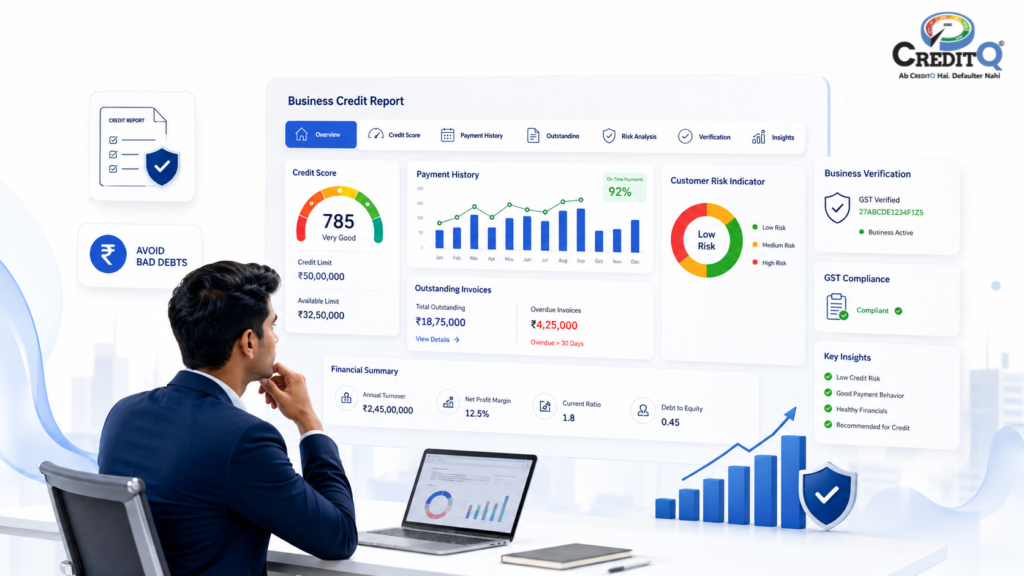
Dealing with business customer late payments? Start with four moves: review the outstanding invoices properly, talk to the customer like a professional (not a debt collector), reassess your credit terms, and check their creditworthiness before you hand over another rupee of credit. Skip any of these and you’re basically hoping the problem resolves itself. It won’t.
For MSMEs especially, repeated delayed payments from customers aren’t some minor inconvenience you shrug off. They’re a direct threat to working capital. Money stuck in overdue invoices can’t pay your suppliers, your staff, or your rent. And the longer that cash sits uncollected, the less room you have to absorb any other mistake.
This guide covers why business customers delay payments, the warning signs worth paying attention to, a step-by-step collections process, and how things like credit checks and business verification help you figure out who still deserves credit — and who doesn’t anymore.
Why Business Customers Delay Payments
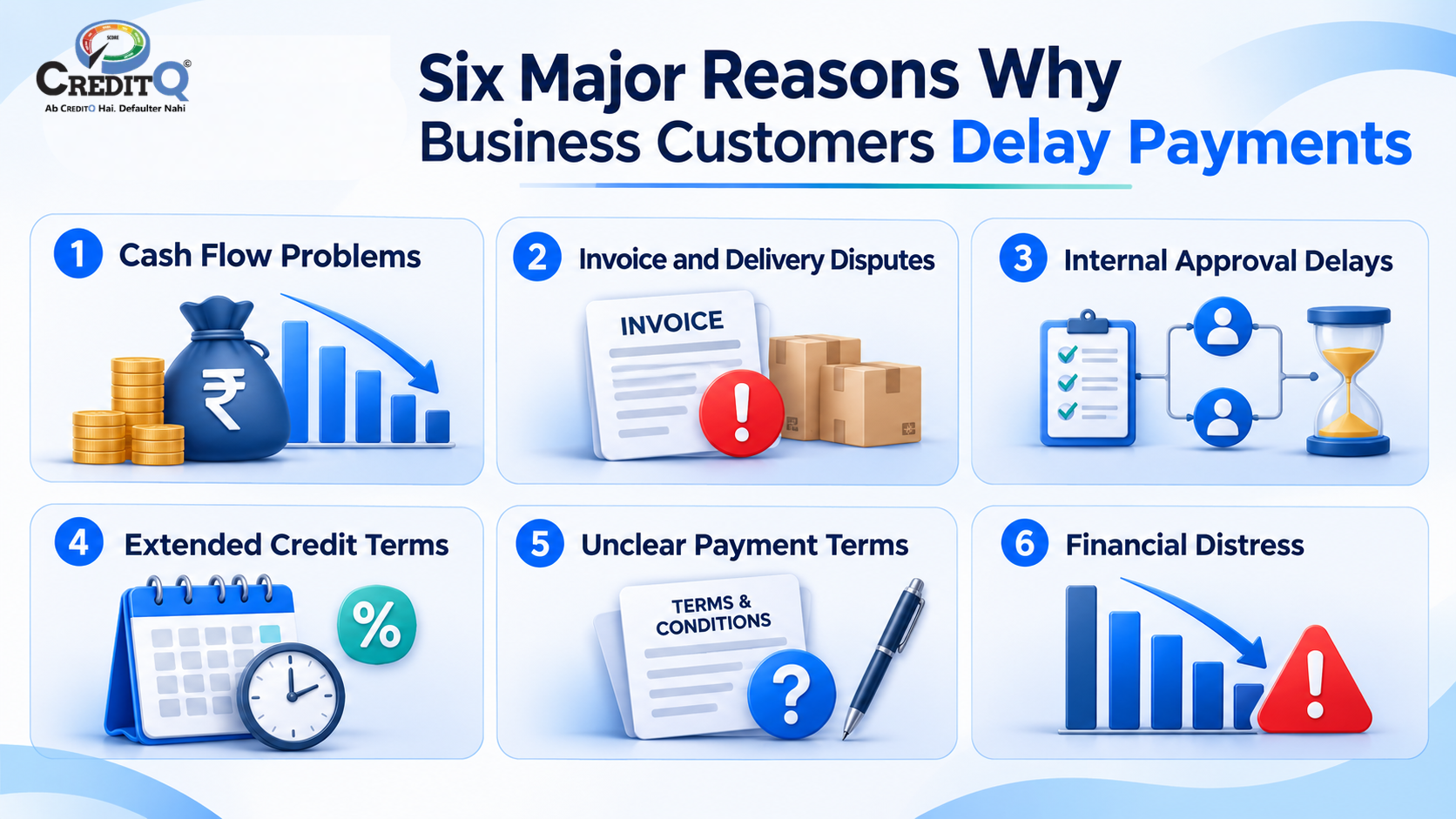
Customer payment delays rarely come down to one tidy reason. Usually it’s a mix:
- Cash-flow stress on their end — they’re waiting on their own customers to pay first, so you wait too.
- Invoice or delivery disputes — a mismatched quantity, a damaged shipment, a pricing disagreement nobody’s resolved.
- Slow internal approval chains. Bigger companies love routing invoices through three departments before anyone actually releases payment.
- Deliberate stretching of credit terms. Some customers treat your invoice as free short-term financing. They’ll pay — eventually, when pushed.
- Unclear or undocumented payment terms. No written due date, no penalty clause — so there’s really no pressure to pay on time.
- Genuine financial distress. The toughest one. This is where customer payment issues start signaling something bigger underneath.
Which bucket a customer falls into changes how you should respond. A disputed invoice needs a conversation and a fix, not a threat letter. Mix those up and you’ll waste energy on the wrong problem.
Warning Signs a Customer May Become a Repeated Late Payer
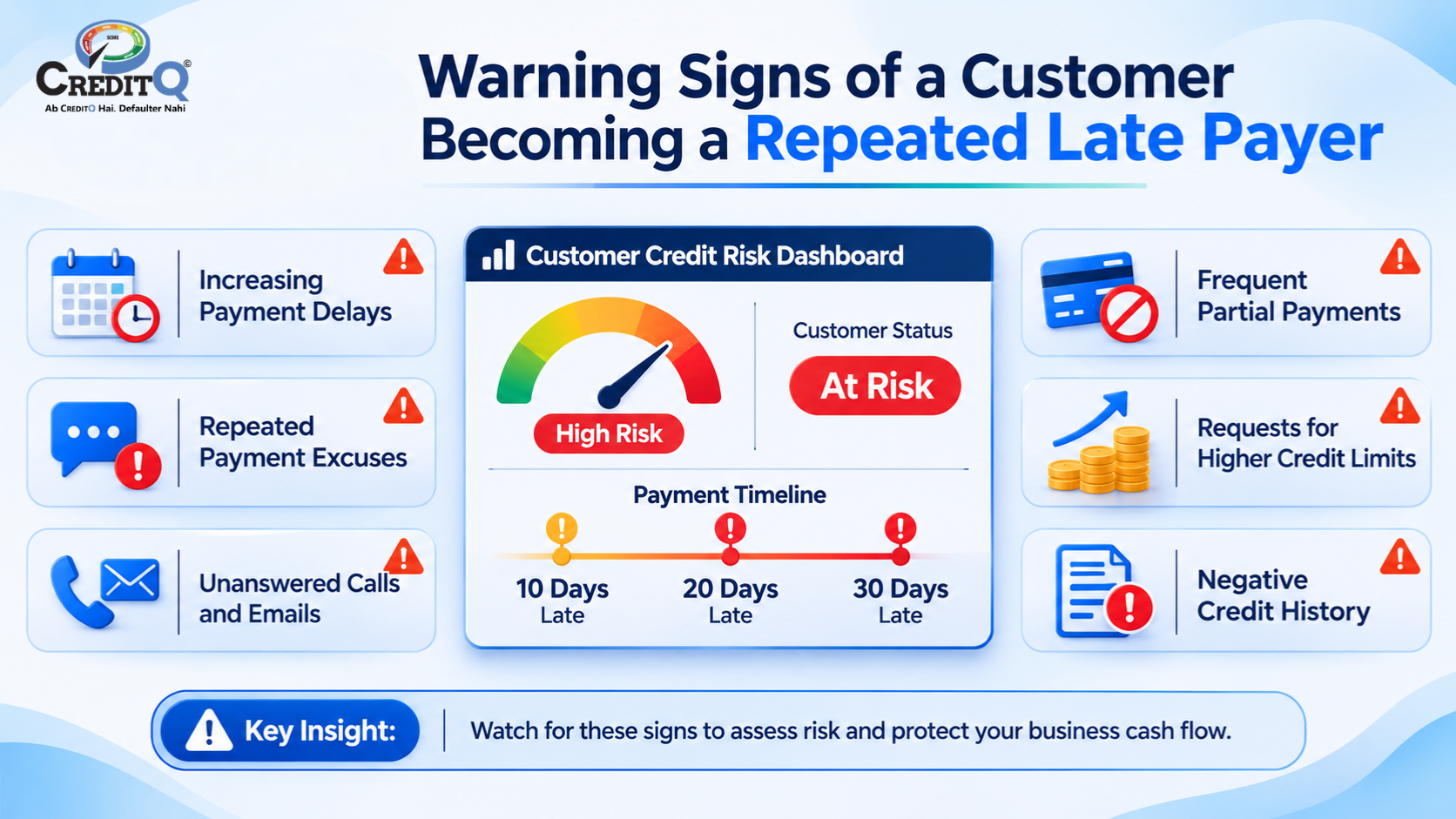
Chronic late payers rarely appear out of nowhere — there’s usually a pattern first. Watch for:
- Payment dates creep later each cycle: 10 days late becomes 20, then 30.
- The same excuse recycled across invoices (“the approver is out,” “finance is processing it” — again).
- Calls and emails that go unanswered, or get bounced between contacts with nothing resolved.
- Partial payments turning into the norm rather than the exception.
- Requests for extended terms or a higher credit limit right when payments are already slipping — a red flag if ever there was one.
- A drop in order volume alongside slow payment, sometimes a sign they’re conserving cash.
- Negative chatter in your industry network, or trade references who hesitate a beat too long when you ask about them.
- Default or adverse remarks on a credit report or business credit intelligence platform.
None of these alone proves trouble. But two or three together? That’s your cue to act before the exposure gets bigger.
Step-by-Step Process for Handling Delayed B2B Payments
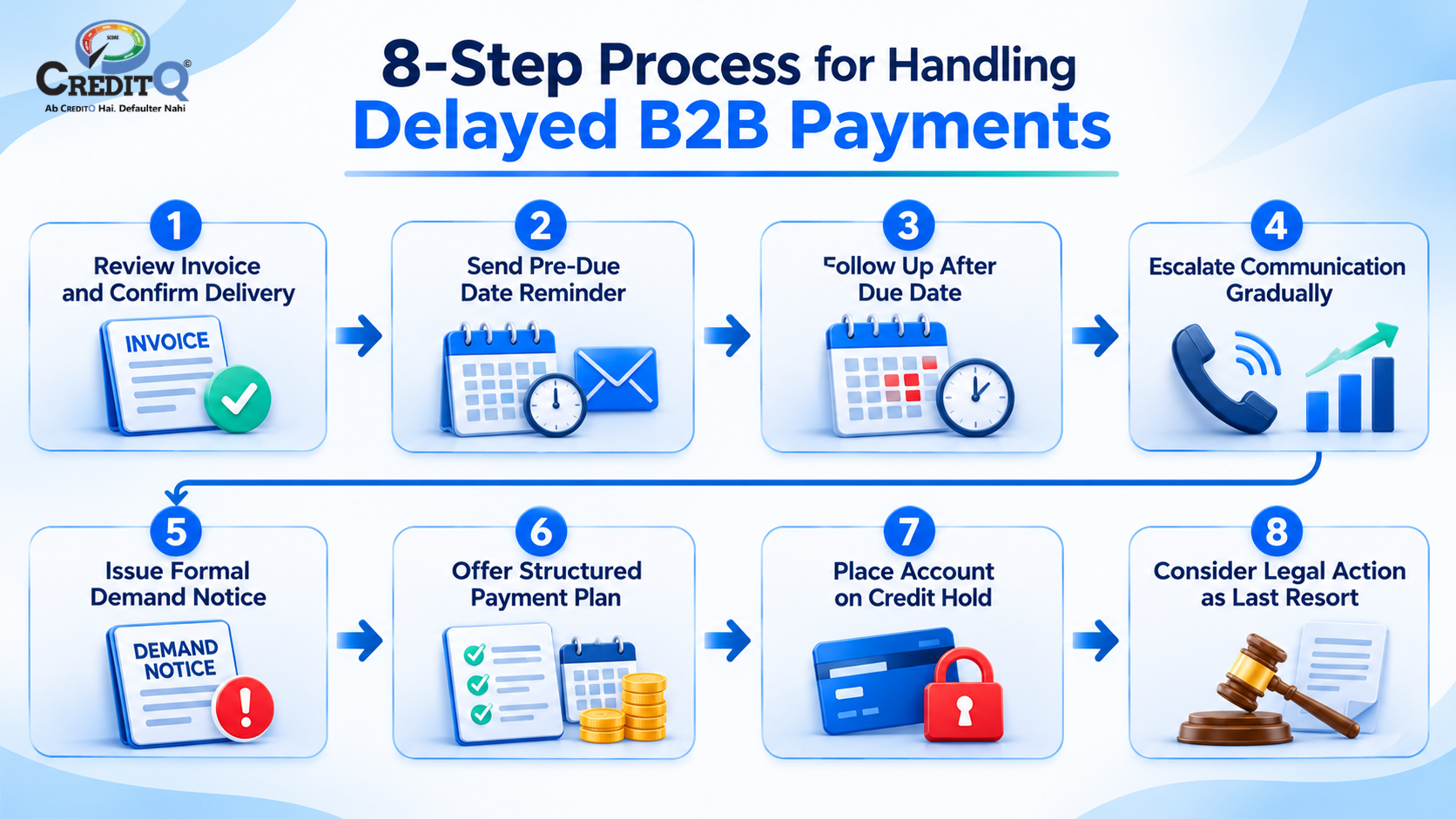
Here’s a workflow you can start using today — whether this is the first overdue invoice from this customer or the fifth.
- Review the invoice and confirm delivery. Check the PO, delivery or service confirmation, and the agreed payment terms before contacting anyone. Make sure there’s no legitimate dispute before you escalate.
- Send a reminder before the due date. A short, friendly nudge a few days early often prevents the delay from happening at all. A consistent payment reminder process can help make those follow-ups more systematic.
- Follow up promptly once it’s overdue. Call or email within a few days of the missed date. Don’t let silence stretch into weeks — that just invites more silence.
- Escalate the tone gradually. Move from a polite reminder to a firmer written notice after two or three attempts with no response.
- Issue a formal demand notice. Put the overdue amount, due date, and consequences of continued non-payment in writing, referencing the original agreement.
- Offer a structured payment plan if it makes sense. Sometimes the customer genuinely needs breathing room — two or three installments can recover the debt faster than an all-or-nothing demand ever would.
- Place the account on credit hold. Stop further deliveries or services until the balance clears, especially if new orders keep landing despite unpaid invoices. A structured business credit management process can help track credit transactions and follow-ups.
- Escalate to legal action or a collections agency as a last resort. Save this for customers who’ve gone completely silent or who disputed in bad faith.
How to Communicate Professionally About Overdue Payments
Tone matters more than most people assume. Aggressive emails rarely speed anything up — they just sour the relationship for no real gain. Keep communication factual, specific, and calm.
That’s really the answer to how to politely ask a business customer for overdue payment — state the facts, invite a response, leave the door open for a quick fix instead of a standoff.
Credit Limits, Payment Terms, and Assessing Customer Creditworthiness
Clear payment terms are your first line of defense against B2B payment delays. That means a written due date, a defined credit limit per customer, and — where it makes sense — an advance-payment clause for new or riskier accounts.
In India, the MSME Development Act, 2006 gives registered micro and small enterprise suppliers a statutory right to interest on delayed payments from buyers, once payment runs past the agreed period (or the statutory 45 days, where no period was agreed). The interest is compounded and tied to a rate notified by the Reserve Bank of India. It’s a real legal backstop, but let’s be honest — pursuing it takes documentation and patience. It works best alongside good internal processes, not as a substitute for them.
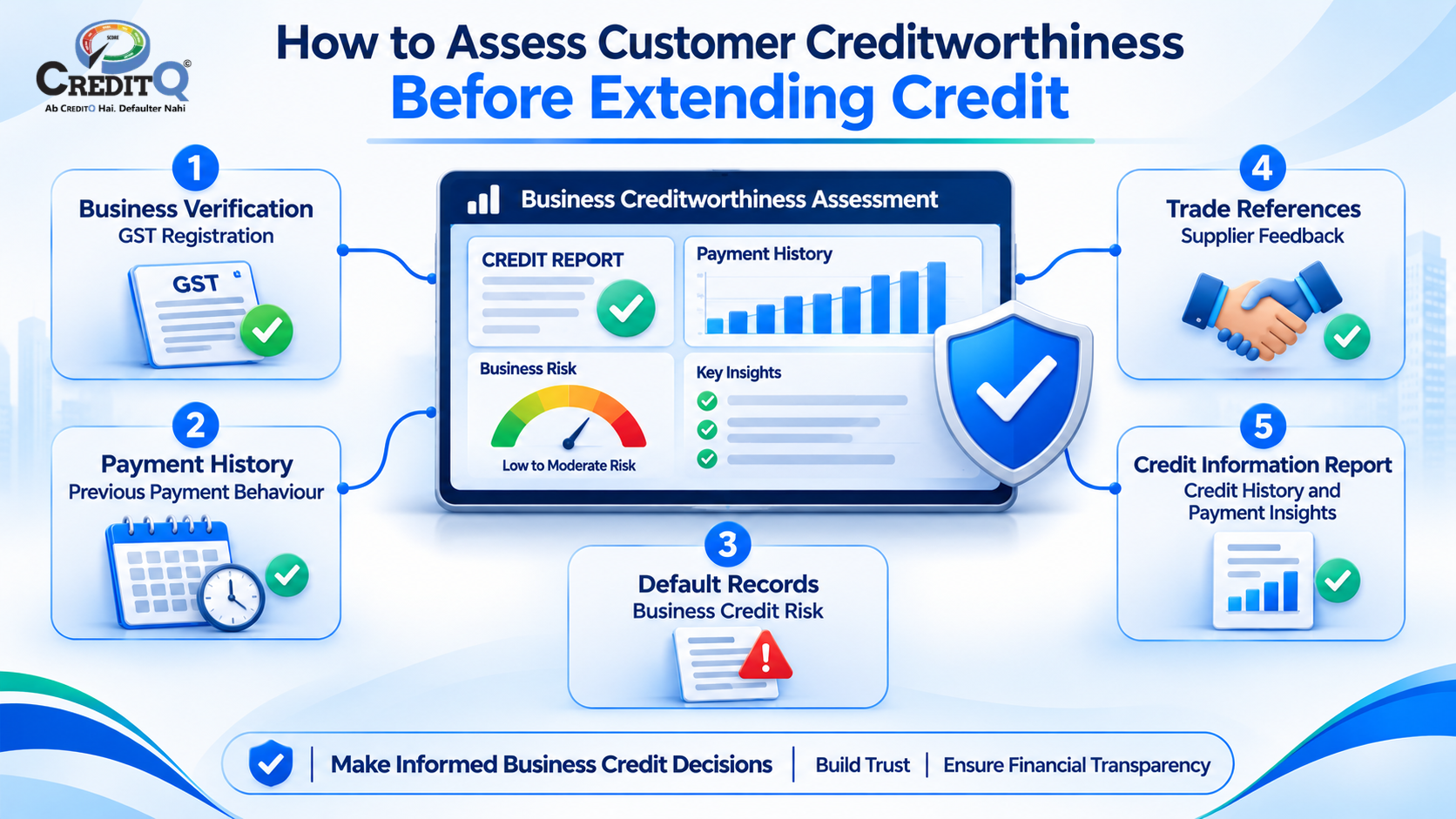
Before extending or increasing credit to any business customer, run a basic risk check:
- Business verification — confirms the company is genuinely registered and operating, not a shell. GST registration checks are a practical starting point in India.
- Payment history — has this customer paid other suppliers on time, based on trade references or what you can find on credit platforms?
- Default records — any flagged defaults, legal disputes, or insolvency proceedings against the business. Where appropriate, review available business credit defaulter information.
- Trade references. A quick call to another supplier who’s dealt with this customer tells you more than their glossy company profile ever will.
- Credit Information Reports from business credit intelligence platforms can bring available credit history, payment information, and recorded default signals together instead of making you chase each piece separately.
Risk-based credit limits — tighter for new or unverified customers, looser for proven payers — are one of the simplest ways to cut the risk of late payments from customers before it ever turns into a collections headache.
When Should a Business Reduce or Stop Extending Credit?
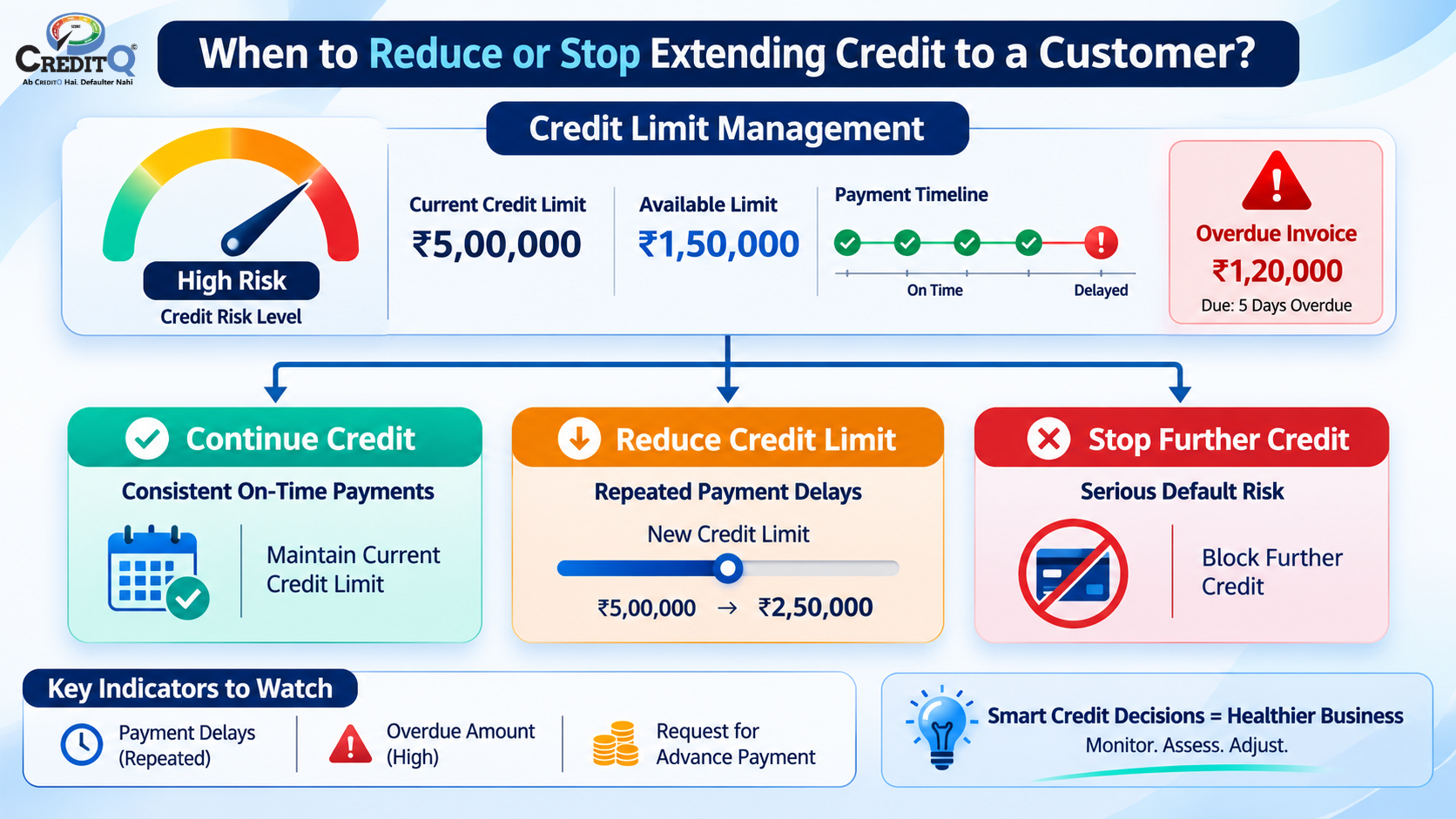
Reduce or stop extending credit when a customer repeatedly breaches agreed payment terms, when your days sales outstanding (DSO) for that account keeps climbing, or when a credit report shows a declining score or a fresh default flag.
Other giveaways: the customer asks for extended terms right after missing a payment, or their order pattern gets erratic alongside slower payment. At that point, shifting them to advance payment or cash-on-delivery isn’t punishment — it’s just sensible. You don’t have to cut them off entirely, either. Halving their credit limit for a quarter, say, often protects the relationship and your cash flow at the same time.
Preventing Repeated Payment Delays and Avoiding Common Mistakes
Prevention beats collection, every single time. A few habits that genuinely help:
- Put payment terms in writing on every quote, PO, and invoice — not buried in a master agreement nobody rereads.
- Review customer credit limits periodically, not just when they first came on board two years ago.
- Automate reminders before and after due dates, so follow-up doesn’t rely on someone remembering to do it.
- Build one consistent collections process with defined escalation steps, so every overdue account gets treated the same way regardless of who’s handling it.
And here’s where things quietly go wrong:
- Inconsistent follow-up — chasing one customer hard while letting another slide creates confusion and sets a bad precedent.
- Extending more credit without checking payment history first. This is a classic, textbook way bad debt piles up.
- Skipping documentation. Verbal promises to pay are nearly impossible to enforce later.
- Ignoring early warning signs. Hoping a slow payer “sorts itself out” almost always costs more than acting early would have.
- No formal escalation path. If reminders fail and there’s no defined next step, the invoice just sits there aging quietly on your books.
Practical Example: Handling a Repeatedly Delayed Customer Payment
Take a small Pune-based packaging supplier dealing with a mid-sized retail client that had slipped from paying in 30 days to averaging 55–60 days over three straight cycles.
The supplier first checked every outstanding invoice against delivery confirmations — no disputes, goods received and accepted, nothing to argue about. Next came a polite written reminder, then a call when that went unanswered for a week. The client cited “internal approval delays.” Same excuse as last time, notably.
Instead of just extending full credit again, the supplier offered a revised structure: half the balance immediately, the rest in two weeks, and future orders shifted to a shorter 15-day term with a reduced credit limit. Before accepting new large orders, they also pulled a Credit Information Report to check for default flags elsewhere. None turned up — but the payment pattern alone was reason enough to tighten terms going forward. The relationship continued. Just on safer footing this time.
How CreditQ Helps Businesses Make Better-Informed Credit Decisions

CreditQ is a business credit intelligence and credit management platform built to help B2B sellers assess customers before extending or increasing credit. In practical terms, that usually means access to business verification checks, credit reports, payment history insights, and default information pulled from available business records. Businesses can also review CreditQ’s process for reporting business credit defaulters when the situation and documentation meet its requirements.
Used well, it supports pretty much every judgment call covered in this guide — setting credit limits, catching early default risk, verifying a new customer before the first invoice even goes out. Worth being clear-eyed about what it isn’t, though: it’s not a replacement for your own collections process, your invoice tracking, or an actual conversation with the customer. Treat it as one more input into a decision that’s still yours to make.
Conclusion
Business customers’ late payments rarely fix themselves if you just wait them out. The businesses that handle overdue payments well review invoices promptly, communicate clearly, adjust credit terms based on real behavior — not promises — and check creditworthiness before extending more credit, not after. Build that discipline into your accounts receivable management and repeated delays stop being a cash-flow emergency. They become a manageable, routine part of running a credit-based business.
Want a clearer picture of a customer’s payment reliability before your next credit decision? Platforms like CreditQ bring verification, credit reports, and payment history together in one place — so you extend credit with more confidence, not less information.
FAQs
Q1.How do you deal with a business customer who keeps delaying payments?
Ans:Review the outstanding invoices for accuracy, follow a structured reminder-to-escalation process, and reassess their credit terms or limit based on the actual payment pattern you’re seeing — not what they promise.
Q2.What should I do if a client keeps delaying payment?
Ans:Confirm there’s no genuine dispute, communicate firmly but professionally, offer a structured payment plan if needed, and place the account on credit hold if delays continue without resolution.
Q3.How do you politely ask a business customer for overdue payment?
Ans:Keep it factual and brief — reference the invoice number, due date, and amount, then ask for a payment date or flag any issue preventing payment. No accusatory tone needed.
Q4.What are the warning signs of a customer who will pay late repeatedly?
Ans:Lengthening delays each cycle, repeated vague excuses, partial payments becoming routine, avoided communication, and requests for extended credit right after a missed payment.
Q5.How can businesses reduce the risk of late payments from customers?
Ans:Set clear written payment terms, use risk-based credit limits, verify new customers through GST and trade reference checks, and review credit reports before extending or raising credit.
Secure Your Business Payments Now