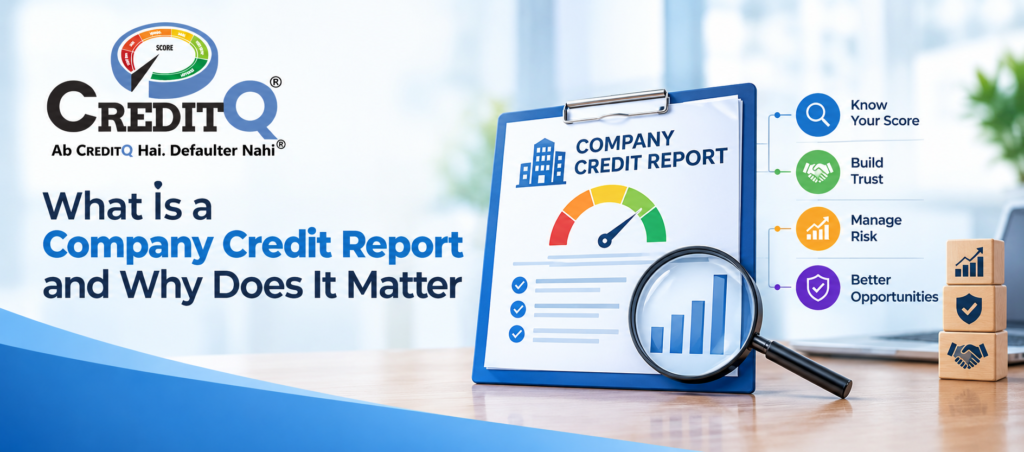
A Company Credit Report acts as the financial mirror of your organization, reflecting your payment habits, trade history, and commercial reliability to the outside world. In today’s world of fast-paced B2B ecosystem, nobody will agree to do business with you until they know how you treat money. Unfortunately, most company owners don’t even know how to check their own company credit reports, much less maintain them on a regular basis. Having your credit report checked will show that you have lost all bargaining power when dealing with customers and other vendors. Being prepared for credit reports will show others that your company can run on its own terms.
Why Should Businesses Regularly Review Their Company Credit Report
Secure Your Business Payments Now
Understanding the Commercial Credit Landscape
Checking your commercial credit standing will allow you to see the trust and credit reputation of your supplier. After asking for payment terms from your raw material supplier, you are asking them to trust your credit reputation. Suppliers check your payment history and outstanding debt, and any legal actions taken against your company.
Commercial credit profiles contain sensitive financial data about you and your business. Unlike personal financial profiles, they are paid to be seen by the public, competitors, potential clients, and even future employees. Your commercial profile may also contain data about competitors. The lack of a secure and up-to-date profile may cause you to lose company contracts and potential customers and you may never know why. Thankfully, platforms like CreditQ provide an easy way for modern leadership to check the commercial payment behaviors of other businesses and maintain trust throughout their B2B transactions.
Key Reasons to Monitor Your Business Credit Report Regularly
The importance of business credit report monitoring becomes clearer once you understand how others view your business’s financial situation. You will gain a better perspective about how your suppliers, creditors, and other business associates perceive your financial situation.
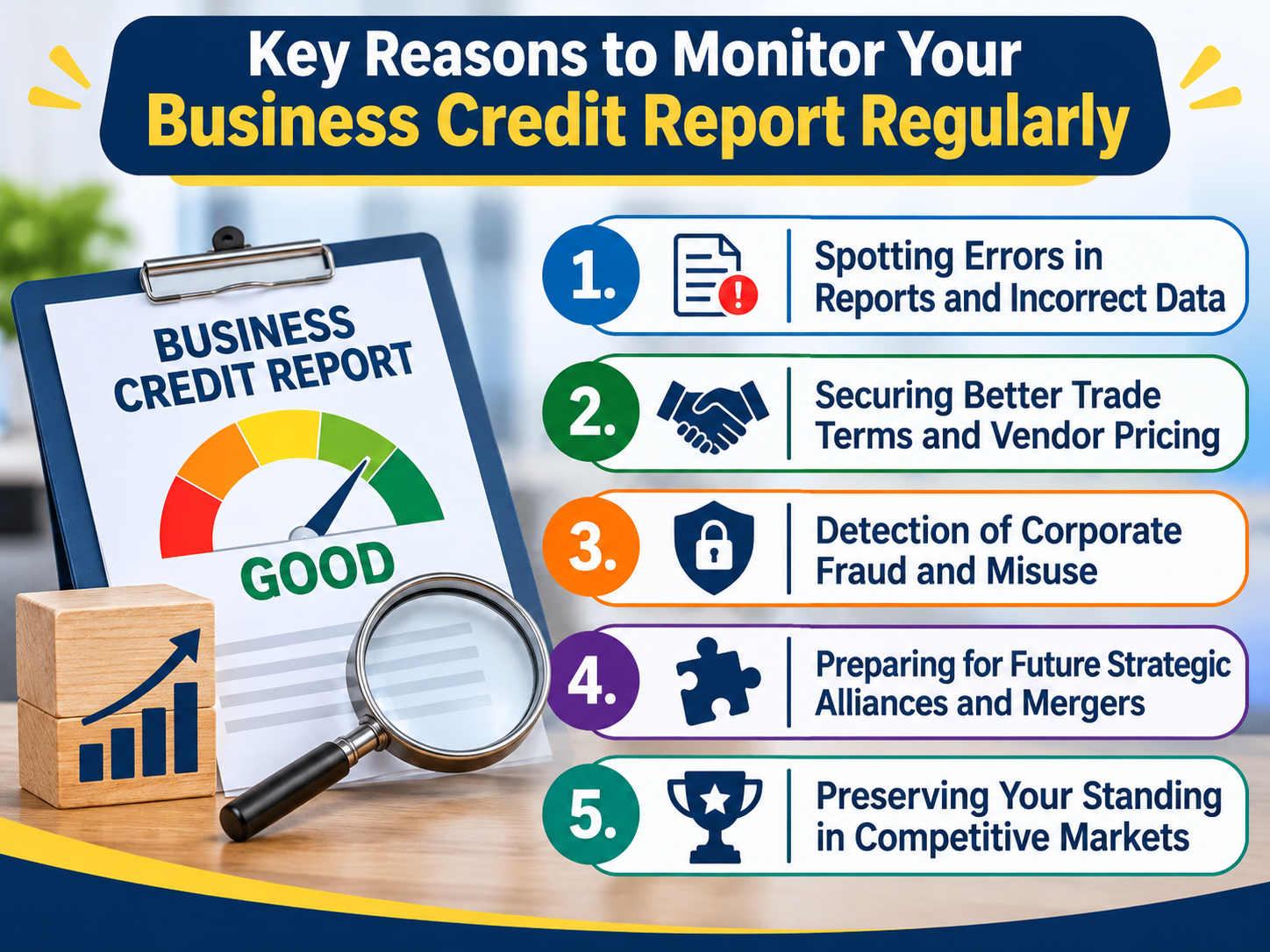
1. Spotting Errors in Reports and Incorrect Data
It is difficult to report data at such a scale with so much accuracy, and reporting agencies process millions of data points every day. Because so much data comes from outside vendors, there are plenty of mistakes. An on-time payment to one of your vendors might get recorded as payment being thirty days late. Worse, other companies might get merged into your record if the names are similar enough. Errors like this will show a false image of financial stress and can become a nightmare for you. However, you can prevent a nightmare scenario from coming true if you check your reports periodically and get in the position to correct the situation through disputes and proving that your payment has been made.
2. Securing Better Trade Terms and Vendor Pricing
Suppliers tend to be more generous to businesses with a solid payment history. You will get the most flexibility with payment terms when suppliers believe you are low-risk. Good standing with suppliers enables your team to negotiate:
- Higher payment terms (from net-15 to net-45 or net-60)
- Higher credit limits for trade purposes
- Reduced early-payment fees and waivers for deposits
- Better service in situations with limited supply
Unless your business regularly reviews its payment history, you may fail to see when renegotiation of existing supplier contracts is justified.
3. Detection of Corporate Fraud and Misuse
Commercial business identity theft is an area of increasing concern. These attacks will use the information and reputation of well-established businesses to order products or services. Once the orders are complete and the criminals are gone, the bills will go unpaid and the owner will not know until collection notices come in. Regular monitoring will help you identify fraud much faster and stop thieves in their tracks. A sudden increase in the amount of inquiries into your credit, unexpected vendors, or a sudden change to your business address should set off red alarms and be a clear indicator that your corporate identity has been stolen.
4. Preparing for Future Strategic Alliances and Mergers
Regardless of whether you choose to respond to an important proposal, seek outside financing, or create a business combination, you will have to provide information regarding your financial situation to other parties. As such, it is always a good idea to ensure that there are no late payment reports that have not been verified, details regarding management that need updating, or any liens. In order to make that more efficient, you can take advantage of CreditQ’s trusted business intelligence that will help organizations to avoid the risk of late payments and defaults.
5. Preserving Your Standing in Competitive Markets
In some industries, gossip spreads like wildfire. It only takes one complaint from a single vendor to impact your reputation and business in that sector. However, the opposite is true if your finances are verified and clear. A sound financial picture will earn trust from potential B2B customers, assuring them that you are going to be in business for the foreseeable future.
How to Perform Your Audit
There are a few key things you need to be mindful of while you audit your Company Credit Report. They are:
Identification and Corporate Details: Verify all of your details, such as business name, registered office, tax details, and corporate leadership information. To comply, all details must be accurate and current. Aging details can even slow down your vendors’ onboarding process.
Trade Payment History: Check the list of suppliers to ensure that your payment history matches your internal records. Look for and resolve any past due payments that you believe you have already made.
Tax Liens, Civil Judgments and Filings: Refer to the Public Records and Legal Filings section.An open case may also be an old case that was resolved and paid, but the court or filing agency has not updated their public records.
Recent Inquiries: View the companies that have recently pulled your credit report. You don’t mind frequent calls from a supplier, but calls from a company you have never done business with could mean someone is opening accounts in your name.
Credit Utilization and Exposure: Keep an eye on how much trade credit you have used. Even if you are on top of your payments, using all of your trade credit can give a bad impression to potential business partners.
Best Practices for Maintaining a Healthy Commercial Profile
Even with a strong credit file, there are still many other aspects that need to be maintained. Below are some tips to incorporate into your finance department:
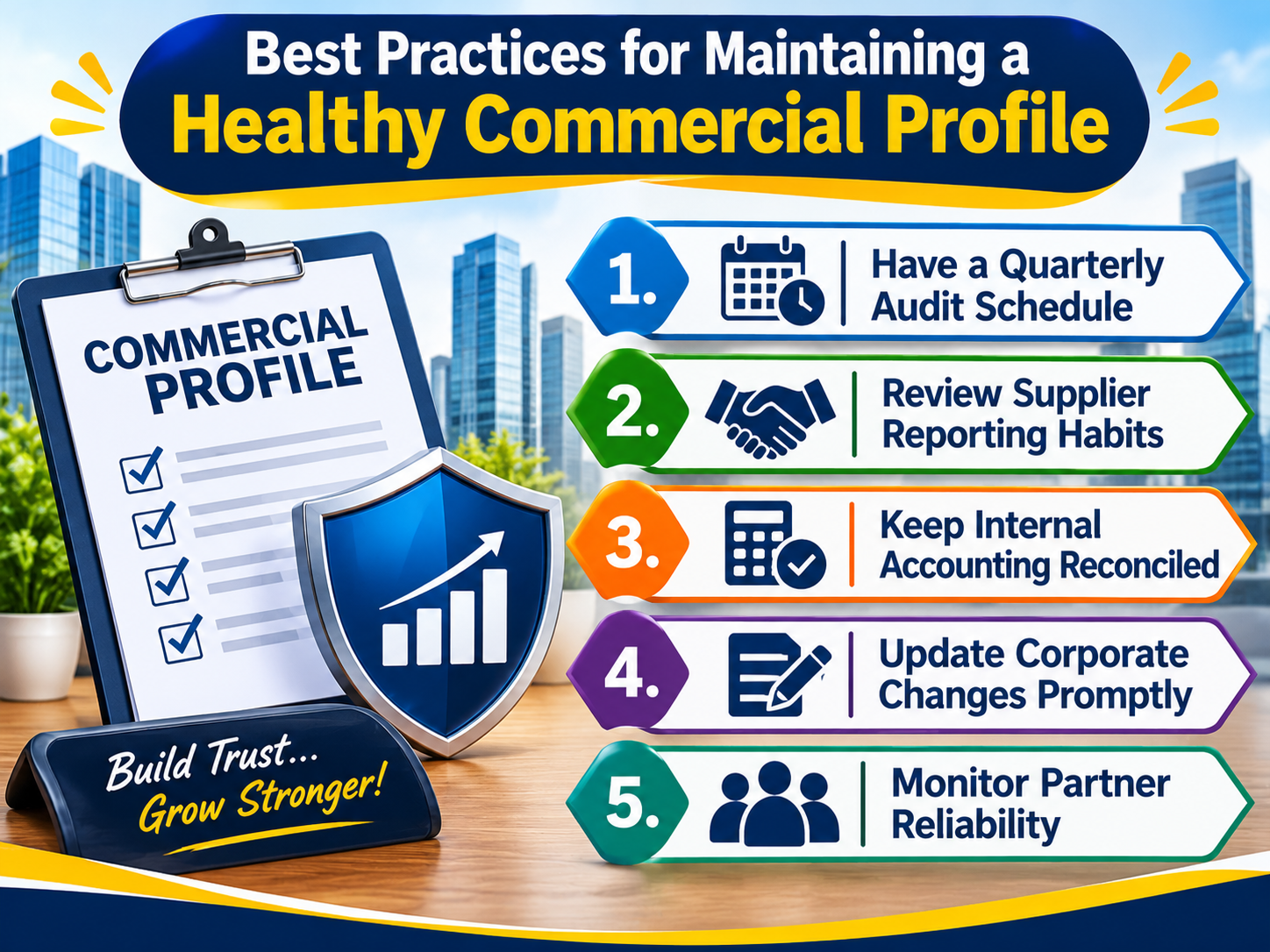
Have a Quarterly Audit Schedule: You should have someone, such as the Controller or Finance Manager, review the Company Credit Report once a financial quarter.
Review Supplier Reporting Habits: Talk to the majority of your suppliers and verify that they report your on-time payments to major credit bureaus. For best results, partner with vendors that will attest to your credit reliability.
Keep Internal Accounting Reconciled: Keep digital receipts of everything. Checks, wire transfers, vendor receipts, etc. You want to be able to pull everything up immediately when a payment dispute arises.
Update Corporate Changes Promptly: Whenever your business changes its physical address, restructures its ownership, or updates its registration details, notify your key vendors and reporting agencies immediately.
Monitor Partner Reliability: Check out prospective partners the same way that others do to you by examining their credit profile. It is especially important when considering the extension of trade terms to new partners. Systems like CreditQ help you to easily verify a company’s credit standing and keep your business safe from bad debtors.
Conclusion
An organization’s business credit reputation is extremely valuable and must be protected. Reviewing your Business Credit Report should be a key part of your business’s financial governance to avoid issues, such as errors, that lead to unnecessary costs, as well as to deter fraudulent activity. Better credit means better terms from suppliers and a smooth sail through corporate audits. Being more active and responsible with your business credit reputation puts your company in a stronger position.
Must Read: How Does a Company Credit Report Help Assess Business Risk?
FAQs
Q1. What frequency of checks for commercial credit is ideal?
Ans: At the minimum, business credit checks should be conducted quarterly for most finance leaders. Some events necessitate monthly reviews, such as rapid growth or leadership restructures.
Q2. Does a business checking its own credit negatively impact the business’s standing?
Ans: No. A business can self-check credit for internal purposes, including audits, and there is no negative impact on commercial standing.
Q3. Why is an invoice that I know I paid showing up as past due?
Ans: Most vendors take 30 to 60 days to report a payment to credit bureaus. It’s also possible that a vendor paid an invoice number incorrectly. In most cases, you can contact the vendor with your payment slip and resolve this issue in a very short amount of time.
Q4. Can my competitors view my company’s payment history?
Ans: Yes. Company payment histories are publicly accessible through business profiles on the CreditQ platform. Competitors, potential customers, suppliers, and market researchers can view your company’s payment records to assess its financial credibility and payment behaviour. However, they must also be registered on the CreditQ platform to access this information.
Q5. How do I fix a mistake that I see on our commercial profile?
Ans: Locate your documents, such as your bank records, payment receipts, or business registration certificates, that prove the record is inaccurate. Then, send an official request to the credit platform, attach your documentation, and inform the reporting company to update your profile.