
Secure Your Business Payments Now
A professional payment reminder is like the first line of defense when B2B payments get delayed, helping companies keep liquidity in place while not irritating their clients. Yet, trusting only gentle nudges is rarely sufficient when the same late payers keep repeating. For business owners and corporate decision-makers, managing financial exposure needs a move from reactive chasing into proactive evaluation. One of the most useful instruments for setting up this protective structure is a detailed data registry that logs organizational payment patterns across different sectors.
When cash flow stalls because commercial accounts stay unpaid, some operational friction just happens. Companies can not really run on guesswork in competitive arenas where payment terms keep getting stretched, again and again. If business leaders learn how to read and apply a strategic Defaulter Report, they can check the financial dependability of potential clients well before any formal agreement gets signed. This analytics-first method swings the balance back toward the supplier, so trade keeps moving forward on solid and transparent terms.
Understanding the Value of Financial Transparency
In business-to-business dealings, trust is a precious asset, but validation is what shields the profit margin. Plenty of firms end up with severe cash blockages because they give away generous trade timelines based only on brand standing, or on verbal reassurances that were never documented properly.

A compiled financial analysis or history sheet gives what looks like an impartial view of a company’s past fulfillment behavior. It basically shows whether a business regularly honors its commercial commitments, or if it tends to leave vendors stranded with unpaid accounts. By using that ledger data, finance teams can notice early warning signs, filtering out troublesome accounts before they create internal operational strain.
When business owners share non-payment information on verified commercial networks, it builds a shared shield for the whole trading community. It keeps bad-faith buyers from moving from one supplier to the next and leaving a string of unfulfilled financial obligations behind. This kind of transparency changes corporate behavior, pushing businesses to treat their outstanding commercial dues as a priority.
Setting Up a Preventive Risk Framework
Minimizing non-payment issues is way easier when you weave prevention right into your onboarding flow. Instead of wrestling with the stress of unpaid balances after delivery, smart enterprises rely on specific documentation to establish firm boundaries.
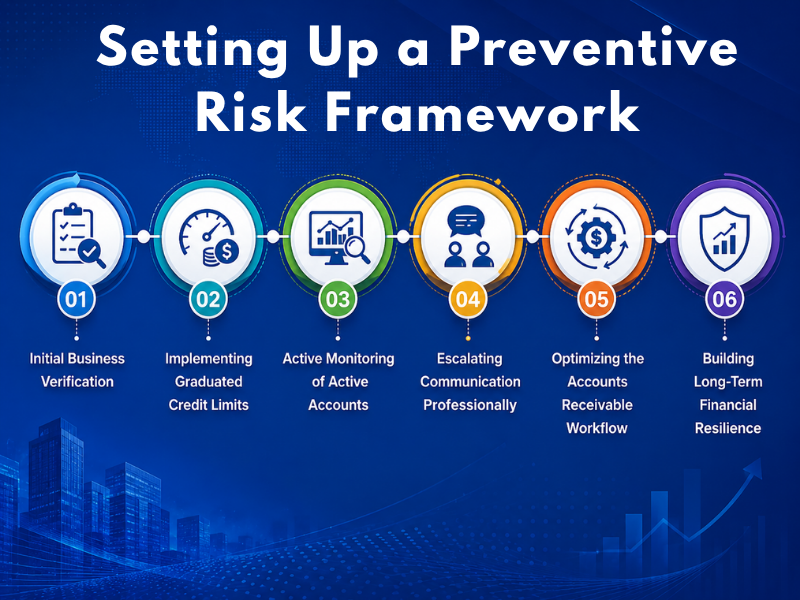
Initial Business Verification
Before you approve any new client for open trade terms, running a Defaulter Report should be a non-negotiable step in the review process. This document gives a direct view into whether the prospect has pending disputes or unresolved payments with other B2B vendors. If a business already has several reports on file from other suppliers, that is a strong sign you should require an upfront deposit or use cash-on-delivery terms.
Implementing Graduated Credit Limits
For new clients who pass the first verification check, it helps to begin with relatively small trading limits. Let them show their financial steadiness over a span of three to six months. When they consistently meet invoice obligations on time, you can expand credit gradually, so your company exposure stays well managed.
Active Monitoring of Active Accounts
Financial stability is never fixed; a client who paid on time last year might be under internal operational strain today. Update your records regularly with an up-to-date Defaulter Report for your existing high-value clients; this helps reveal any negative movement in payment conduct earlier. If a long-term client suddenly starts postponing settlements elsewhere, you can rebalance your terms before your own invoices get behind.
Escalating Communication Professionally
When an invoice slips past its due date, how a company does follow-up communication decides the speed of resolution. A somewhat structured escalation process keeps business operations professional, while still protecting financial interests in a firm way.
First, there is always a Payment Reminder message sent to the client’s accounts payable team. That message should carry the full critical details, like the original invoice reference, a breakdown of the services that were provided, and the precise banking coordinates. Delays often happen because of plain administrative oversight, or emails getting missed, sent too late, or lost in the wrong place. A calm and polite message usually clears the hurdle immediately.
If the first outreach brings no response, or if it leaves you with vague promises about later settlement, then a more direct approach becomes necessary. This is where business management platforms provide vital structural support, in practice. By using the specialized network that CreditQ has built, companies can handle their still-open ledgers with much more control. CreditQ allows businesses to monitor payment delays systematically and send formal notifications that actually carry weight in the wider business circle.
When a buyer keeps ignoring a real outstanding obligation, filing the non-payment on CreditQ becomes a serious and legitimate step. Since CreditQ maintains a broad ledger that many businesses consult to confirm creditworthiness, being shown as a non-paying entity can severely limit a buyer’s ability to secure trade terms with other vendors. In many cases the strong business wish to keep a clean corporate reputation pushes settlement forward rather quickly.
Optimizing the Accounts Receivable Workflow
Today’s commercial operations demand automation to keep up with market pressures. When payments are tracked manually, one invoice at a time, through jumbled spreadsheets, it can create missed dates, forgotten nudges, and, in the end, cash that just sits there, unassigned.
By bringing in automated software, financial controllers can set a Payment Reminder to trigger at the right moments, for example, five days ahead of the due date, then right on the due date, and again seven days after the deadline. That approach keeps messaging consistent while not stealing daily focus from your internal accounting team.
Furthermore, integrating data from a verified Defaulter Report straight into your enterprise resource planning system makes the whole decision process a lot easier. When sales teams try to register an order for a client marked for non-payment, the system can automatically stop the transaction until the finance department does a manual review. That kind of cross-department coordination guards the company from taking on avoidable exposures, even when there is pressure to chase raw sales volume.
Building Long-Term Financial Resilience
A strong business does not run on bright sales projections on a whiteboard alone. It’s sustained by liquid capital, first. By treating the billing-to-cash cycle with the same strategic weight as product development or customer acquisition, B2B leaders keep corporate continuity in mind and protect longevity over time.
Leveraging contemporary business reporting networks such as CreditQ makes it easier to remove the uncertainty from B2B trade. It supports a commercial atmosphere built on accountability, quick exchange of information, and reciprocal financial regard. When you shield your day-to-day operations from the danger of bad debts, you keep the cash on hand you need to grab fresh market openings, fund improvement work, and expand your enterprise with full trust.
Must Read: Why Are Auto Payment Reminder and Follow Up Essential for Businesses?
Frequently Asked Questions
Q1. What exactly is a report on business non-payment?
Ans: It is an official commercial document that records situations where a company has failed to settle its legitimate trade invoices with a supplier. It lays out the unpaid sum, the time spent in default, and the reporting party’s particulars, so other vendors can review transaction exposure.
Q2. At what point should a company report a client for non-payment?
Ans: While rules differ, lots of businesses will usually go ahead and file a report once an invoice stays unpaid for about 60 to 90 days after the due date, as long as several official reminders and formal notices have been disregarded by the buyer.
Q3. How does a listing on a business reporting registry affect the buyer?
Ans: When a buyer gets flagged for non-payment on a platform like CreditQ, it gives other suppliers in the B2B field a clear signal that the relationship may be risky. That warning tends to make it extremely hard for that buyer to obtain credit-based trade terms, access to raw materials, or even ongoing services from other vendors later on.
Q4. Can a business dispute an incorrect non-payment report filed against them?
Ans: Yes. Credible business reporting platforms maintain an actual dispute resolution pathway. If the buyer thinks the entry is not correct, or it grew out of a real commercial-quality disagreement, they can submit supporting proof, like settlement records or contract documentation, so the platform can update and clear the listing.
Q5. How can a supplier encourage a buyer to pay without damaging a long-term partnership?
Ans: The key lies in maintaining a professional, objective tone. Relying on structured, automated systems to deliver notifications keeps the process neutral and transactional, framing the follow-up as a standard business workflow rather than a personal confrontation.