
In today’s commercial world, keeping a clean view of financial stability is very important if a business wants to keep growing and reduce the chance of nonpayment. Every time a company does business, there is some built-in uncertainty, particularly when credit terms are offered to a fresh vendor or even a long-time partner. Because of that, enterprise leaders often rely on a Company Credit Report, not just as a formality, but as a practical way to measure risk with real information.
Using a full company credit report is an essential step for business risk assessment. Platforms such as CreditQ give companies the framework to review financial corporate profiles, so credit decisions come from verifiable records rather than gut feeling. This helps reduce exposure, clarify trends, and support steadier commercial choices.
A commercial credit evaluation acts like a strategic roadmap, but it also sort of explains the financial habits and the structural story of an enterprise. Different from an individual profile, a corporate profile looks at the deeper operational metrics, the operational longevity, and how payments move across several vendors. If business owners use platforms such as CreditQ, they can get direct access to centralized information, and it makes clear how a prospective B2B client handles day-to-day trade obligations and ongoing financial commitments.
Understanding a Commercial Summary
Getting familiar with the specific parts of a company credit report is important before treating it as your main risk mitigation tool. These papers bring together a wide range of public records, legal submissions, and trade credit histories into one unified view. That helps procurement teams and credit management groups interpret the actual level of risk tied to a corporate entity, so new partnerships do not endanger internal financial health.
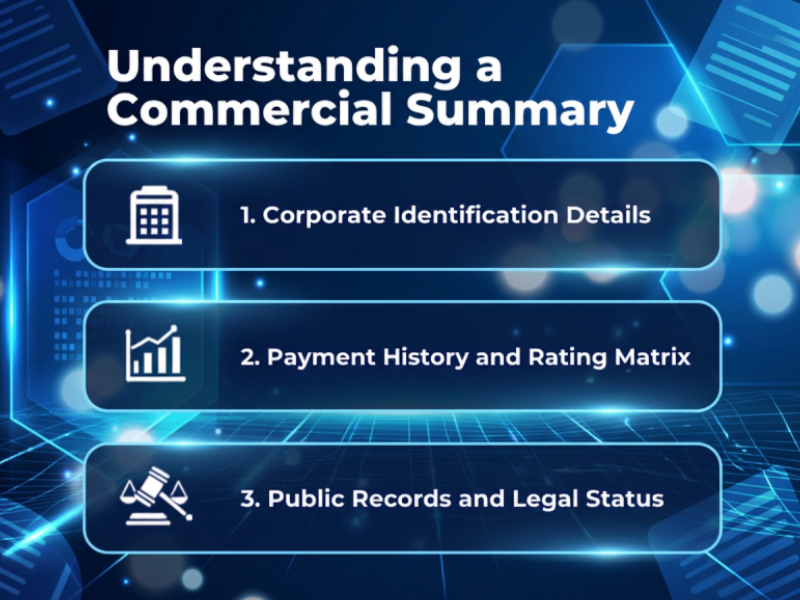
1. Corporate Identification Details
The primary building blocks of these financial profiles include comprehensive corporate identification details. This section confirms the official legal status of the enterprise, its registration details, operational addresses, and corporate management structure. Verifying these core details via CreditQ ensures that a business is engaging with a legitimate entity, effectively eliminating the risk of corporate identity fraud or dealing with shell companies.
2. Payment History and Rating Matrix
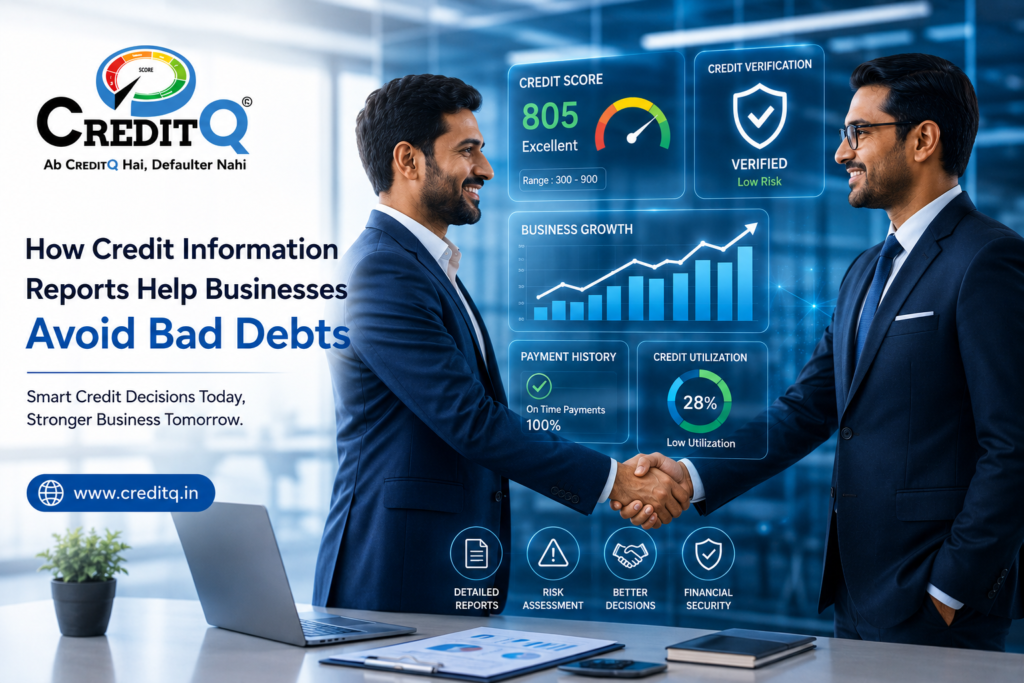
Another key element is the official payment history and also the computed credit rating score. The score, in practice, is like a statistical synthesis of how reliably an enterprise settles its trade accounts with suppliers. If a business keeps delaying payments beyond the agreed-upon terms, then that trend gets picked up inside the scoring matrix. By using CreditQ, credit managers can look back at those payment patterns and get a predictive signal about whether the client will respect future payment terms.
3. Public Records and Legal Status
Public records and legal filings also make up a substantial part of the document. This includes details about ongoing litigation, tax defaults, and restructuring filings that may weaken corporate continuity. When such legal vulnerabilities are present, they can seriously reduce an entity’s operational capacity. Therefore, reviewing these components helps an organization avoid entering agreements with companies standing near financial insolvency.
The Urgency for Business Risk Assessment
Why would a Company Credit Report feel so essential for modern business risk assessment, honestly? It comes back to the unpredictable nature of supply routes and cash flow rhythms. When a company provides goods or services on account without checking prior financial conduct, it is basically moving in the dark. One very large nonpayment event from a cornerstone customer can set off a serious liquidity squeeze, which then throws off internal workflows and endangers long-term steadiness.
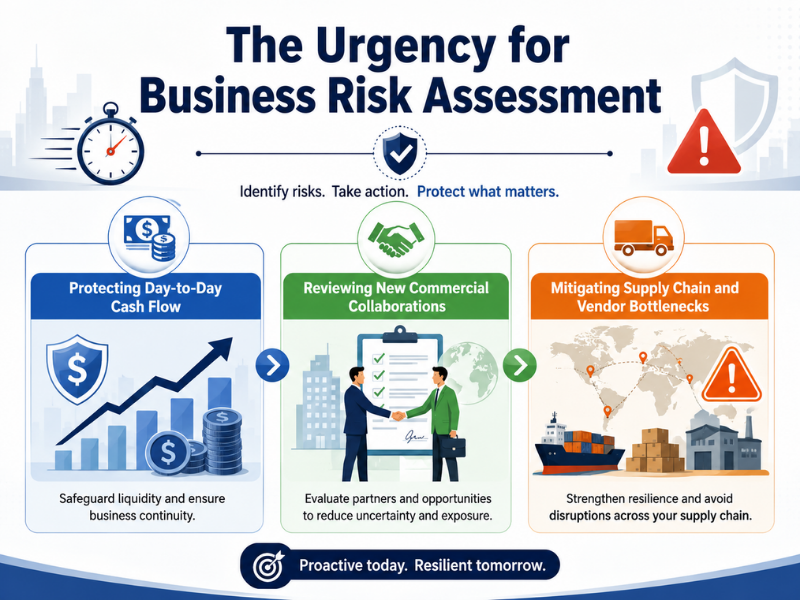
1. Protecting Day-to-Day Cash Flow
Protecting day-to-day cash flow remains the prime objective for every finance leader. When teams run recurring reviews via CreditQ, they can stop cash blockages from overdue receivables. Once the client risk profile is known beforehand, departments can request prepaid terms or tighten payment intervals for higher risk accounts, so incoming revenue keeps arriving without awkward pauses.
2. Reviewing New Commercial Collaborations
When you look at new commercial partnerships, you need solid due diligence. During onboarding, a prospective client might project an immaculate corporate image, but the verified trade record might tell a completely different story. Platforms like CreditQ remove the gloss, revealing the enterprise’s real operational conditions. That clear view helps procurement teams choose partners who actually have financial stability, not just a polished narrative.
Setting the right credit terms and limits is another place where data-driven insights matter a lot. Rather than giving everyone the same credit policy, an organization can tailor the payment schedule using individual risk scores. Low-risk entities can receive more generous timelines, which builds goodwill and reinforces the relationship. Higher-risk entities can be kept under tight observation, with limited credit exposure and fewer surprises.
3. Mitigating Supply Chain and Vendor Bottlenecks
Mitigating systemic risks across an entire supply chain is a long-term benefit of consistent credit monitoring. If one key supplier or a major distributor hits a sudden financial downturn, the ripple effects can stall production or even distribution networks. By proactively assessing accounts through CreditQ, companies can catch early warning signals of distress, and that gives them time to diversify their vendor base before the disruption starts.
How Can Modern Networks Support Enterprise Security?
CreditQ is an innovative platform made for modern commercial security, and it streamlines the full evaluation workflow. It enables smoother reporting and ongoing monitoring, which turns complex financial data into clear, digestible insights. With this purpose-built network, enterprises can promote a stronger credit discipline mindset, and that reduces the likelihood of bad debts and uncollectible accounts by a meaningful amount.
Must Read: How a Business Credit Report Helps You Avoid Payment Defaults and Financial Risks
Conclusion
In conclusion, business risk assessment is not a one-time event but a continual strategic process. Bringing broad credit intelligence into everyday operations is the most dependable approach to protect a business from unforeseen corporate defaults. Depending on validated platforms like CreditQ, help your commercial ecosystem stay profitable, secure, and resilient when economic conditions get unpredictable.
Frequently Asked Questions
Q1: What is the difference between a personal credit score and a corporate credit score?
Ans: A personal credit score shows an individual’s private financial routines, such as credit card usage and residential mortgages. On the other hand, a corporate credit score reviews a whole business entity through commercial trade credit, vendor payment consistency, and public legal documents, which platforms like CreditQ compile to support commercial risk managers.
Q2: How often should a business check the credit profile of its regular clients?
Ans: Credit profiles are dynamic, and they can shift quickly because market conditions move or because of internal corporate restructuring that happens. Usually, it makes sense to review during initial onboarding and then do recurring checks at least twice per year. Or, use continuous monitoring platforms from CreditQ, if that is available.
Q3: Can a newly established business have a comprehensive credit summary?
Ans: A brand new enterprise often has a thin file, mainly because there is no older trade history yet. Still, once they start setting up accounts with suppliers and they use corporate payment terms, the profile fills in over time. Then platforms like CreditQ can generate a more dependable assessment score.
Q4: What signs in a financial profile show extremely high operational risk?
Ans: There are a few red flags, like a steady pattern of payments that keep getting delayed past standard terms and not just a one-off miss. Also, frequent legal disputes or ongoing claims, tax defaults, and rapid shifts in corporate management can point to serious instability. When these indicators appear early, businesses can recalibrate credit exposure before severe losses show up.
Q5: How can a business raise its own commercial rating profile?
Ans: To improve a rating profile, a company needs steady financial discipline, for example, paying vendor invoices ahead of time or exactly on the due date, keeping credit utilization low, and closing out any legal disputes promptly. A positive reporting history on CreditQ signals strong corporate reliability to future partners, and it helps the rating stay resilient.