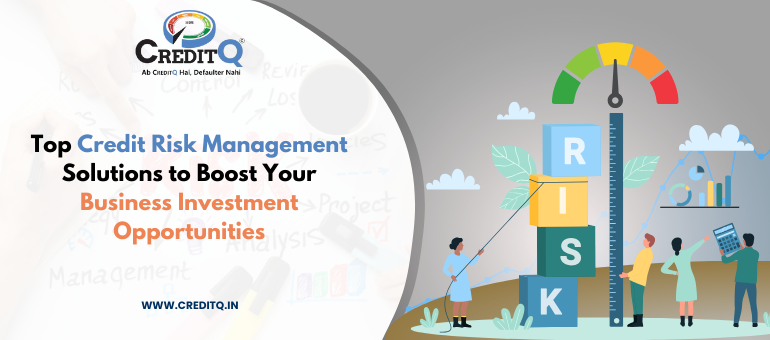
Late payments, vanishing buyers, and paperwork that takes weeks to verify — these aren’t new problems, but in 2026 they’re happening at a scale and speed that manual processes simply can’t match. B2B trade volumes keep climbing, supply chains stretch across borders, and fraud schemes grow more sophisticated every quarter. That’s exactly why AI in Business Credit Risk Management has moved from “nice to have” to a practical necessity for MSMEs, lenders, credit managers, and suppliers who extend trade credit every day.
This guide walks through how AI is changing credit risk management step by step — starting with why traditional methods fall short, moving through machine learning and predictive analytics, and ending with the future of intelligent credit management. Whether you’re a small business owner or managing a regional lending team, the goal is the same: understand what AI-powered credit scoring and automation can realistically do for your business today.
Step 1: Understand Traditional Credit Risk Assessment and Its Limitations
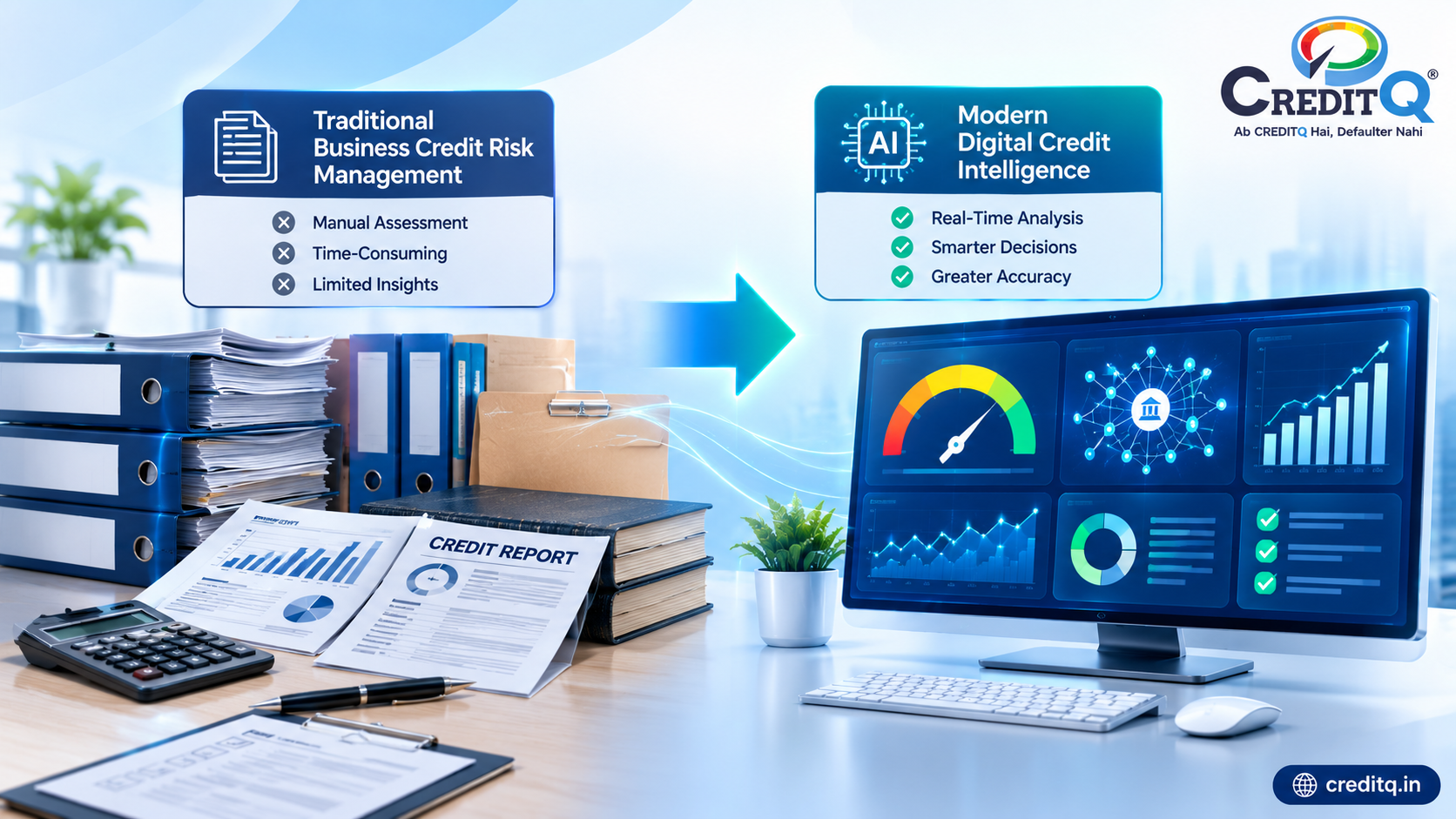
Before AI entered the picture, credit risk assessment relied almost entirely on static inputs: financial statements, credit reports, bank references, and manual verification. A credit manager would review a buyer’s financial records, check available credit information, contact trade references, and make a decision based on the information available.
That approach worked reasonably well when trade relationships were local and business transactions moved slowly. However, it struggles in today’s fast-moving B2B environment because:
- Financial statements may be months old by the time they’re reviewed, missing recent cash flow problems.
- Traditional credit reports may not reflect sudden changes in payment behaviour.
- Manual verification is time-consuming and difficult to scale across hundreds of buyer relationships.
- Human reviewers may apply inconsistent evaluation criteria.
- Fraud indicators, including forged documents and suspicious business activities, can go unnoticed until financial losses occur.
For MSMEs, these challenges can directly affect working capital and business growth. A single buyer delaying payments can create a chain reaction, affecting supplier payments, inventory purchases, and daily operations.
Businesses can reduce uncertainty by reviewing available business credit information before extending trade credit. A Credit Information Report from CreditQ provides information about business financial dealings, reported defaults, and company credit-related indicators to support informed business decisions.
AI doesn’t necessarily replace traditional credit risk assessment. Instead, it improves how quickly and consistently available information can be analysed, while experienced professionals continue to play an important role in final decisions.
Step 2: Learn How AI, Machine Learning and Predictive Analytics Work in Credit Risk
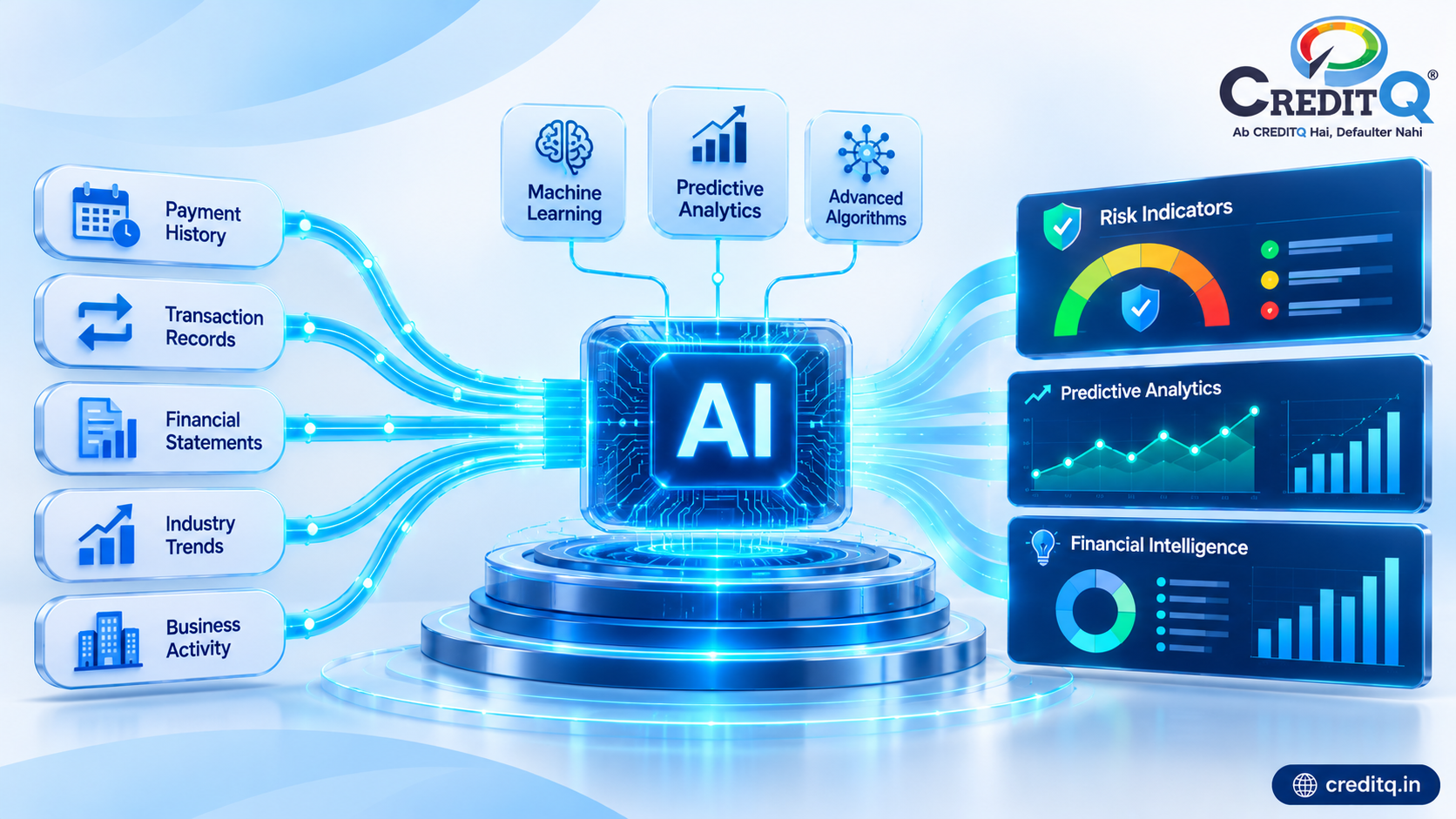
Machine learning in credit management works by training models on large volumes of historical data, including payment timelines, transaction records, financial information, industry trends, and other relevant business signals.
Predictive analytics takes this further by estimating the likelihood of a particular outcome:
- Will this buyer pay on time?
- Is this business showing signs of financial stress?
- Is the applicant likely to default within the next 90 days?
- Has a customer’s payment behaviour changed significantly?
Models can recalculate risk estimates when new information becomes available rather than relying entirely on a single historical snapshot.
This is where automated credit risk analysis becomes valuable. Instead of requiring a credit officer to manually collect and cross-check every document, automated systems can process multiple data sources and highlight potential risk indicators.
For example, digital Business Credit Management helps businesses manage buyer-supplier credit transactions through digital initiation, acknowledgement, invoice sharing, and payment reminders. CreditQ also supports integration with accounting software such as Tally, Marg, and ERP systems.
Credit risk automation doesn’t just save time. It changes how finance teams allocate their efforts. Routine transaction monitoring and payment reminders can be automated, allowing employees to focus on negotiations, customer relationships, and complex credit decisions.
Step 3: Apply AI-Powered Credit Scoring, Verification and Payment Behaviour Analysis
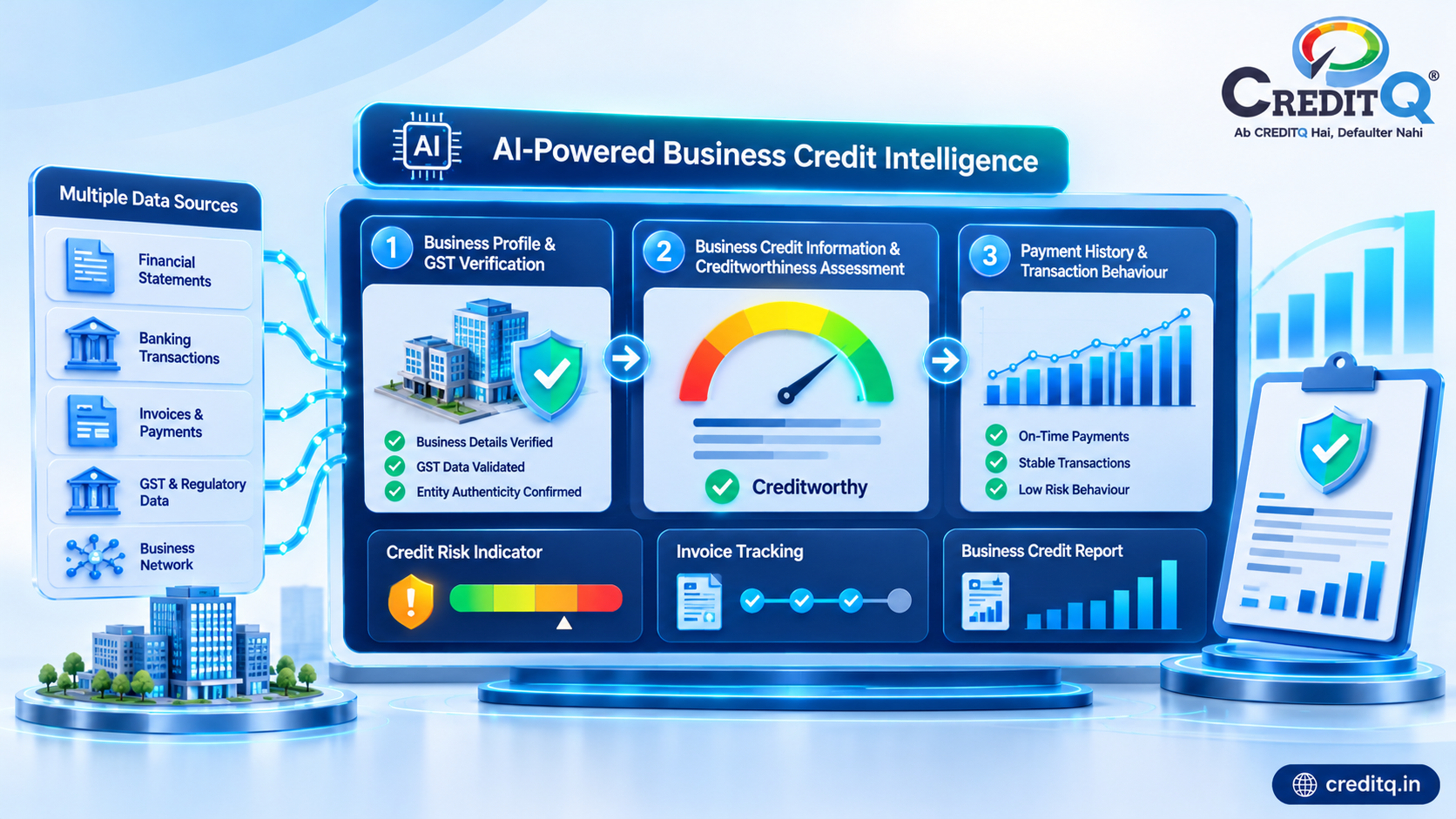
This is where AI in financial services becomes tangible for everyday credit decisions. Three capabilities are particularly important.
1. AI-Powered Credit Scoring
Rather than relying on a single static bureau number, AI-based models can combine financial information, transaction history, payment patterns, and behavioural signals into a dynamic risk assessment.
A buyer’s estimated risk can change when new payment information becomes available. This helps businesses identify changes that may not appear in periodic reviews.
2. Automated Customer and Vendor Verification
For B2B suppliers onboarding a new wholesale buyer, automated verification can help cross-check business registration details, tax information, company records, and available trade references.
This can reduce the time required for preliminary checks and help sales teams make more informed decisions before approving credit transactions.
3. Payment Behaviour and Trade Credit Analysis
AI models can track invoice timelines across a buyer’s trading history, looking for patterns such as:
- Increasingly delayed payments.
- Repeated partial payments.
- Frequent payment disputes.
- Changes in transaction frequency.
- Unusual variations in outstanding balances.
These indicators can help businesses identify potential payment problems before they develop into larger defaults.
This is also where dedicated business credit intelligence platforms like CreditQ become relevant. CreditQ provides access to business credit information and credit management services through a centralized platform.
Its Credit Information Report helps businesses review available information about prospective buyers and business partners, including financial dealings and reported default-related information.
The objective is to make better-informed decisions before entering into new business relationships rather than relying entirely on assumptions or informal references.
In short, AI-powered credit scoring uses multiple data sources to estimate current credit risk, while business credit intelligence platforms help companies access relevant business credit information.
Step 4: Set Up Early Warning Systems and AI Fraud Detection
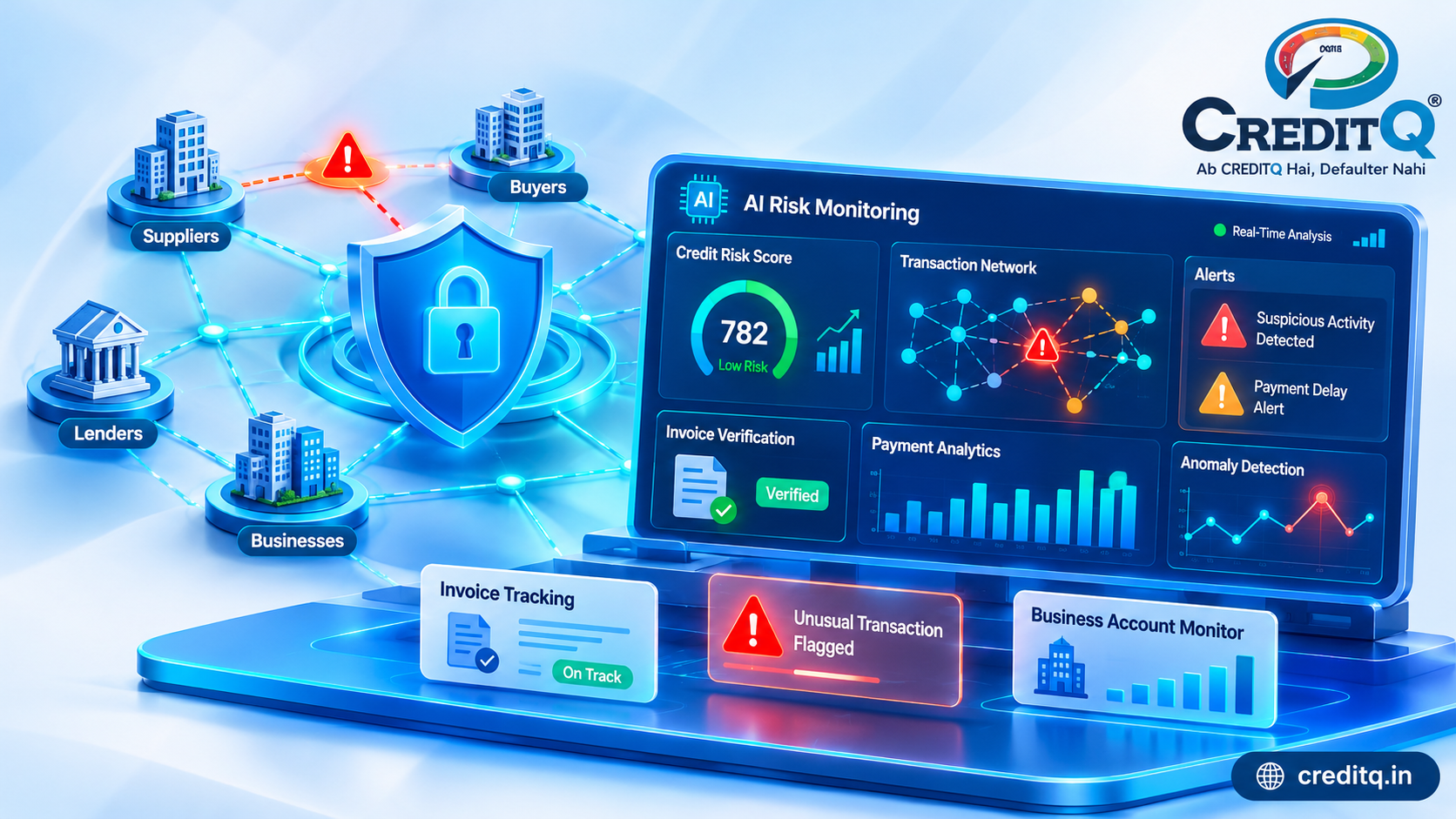
Fraud doesn’t usually announce itself. It often appears through unusual patterns, such as a sudden increase in order volume from a new account, duplicate invoices submitted under slightly different company names, or inconsistent business registration details.
AI fraud detection models are designed to identify these irregularities by comparing new transactions against learned patterns of normal activity.
When something deviates from expected behaviour, the system can flag the activity for further investigation.
Common warning indicators include:
- Duplicate or suspicious invoice submissions.
- Inconsistent business identification details.
- Unusual transaction volumes.
- Unexpected changes in payment behaviour.
- Suspicious activity across connected accounts.
Early warning systems apply similar monitoring techniques to general credit exposure. Rather than waiting for a formal default, businesses can monitor payment delays and changes in outstanding balances.
For example, if a buyer repeatedly misses payment deadlines, a supplier may consider reducing the credit limit, requesting advance payment, or temporarily reviewing further credit transactions.
CreditQ’s Business Credit Bureau solution focuses on business credit information, payment reminders, follow-ups, and reported payment default information. Such information can help businesses make more informed decisions when evaluating buyers and managing credit relationships.
AI-based monitoring can support these processes, but suspicious activities should always be investigated before any business or individual is treated as fraudulent.
Step 5: Apply AI to Real-World B2B Credit Risk Scenarios
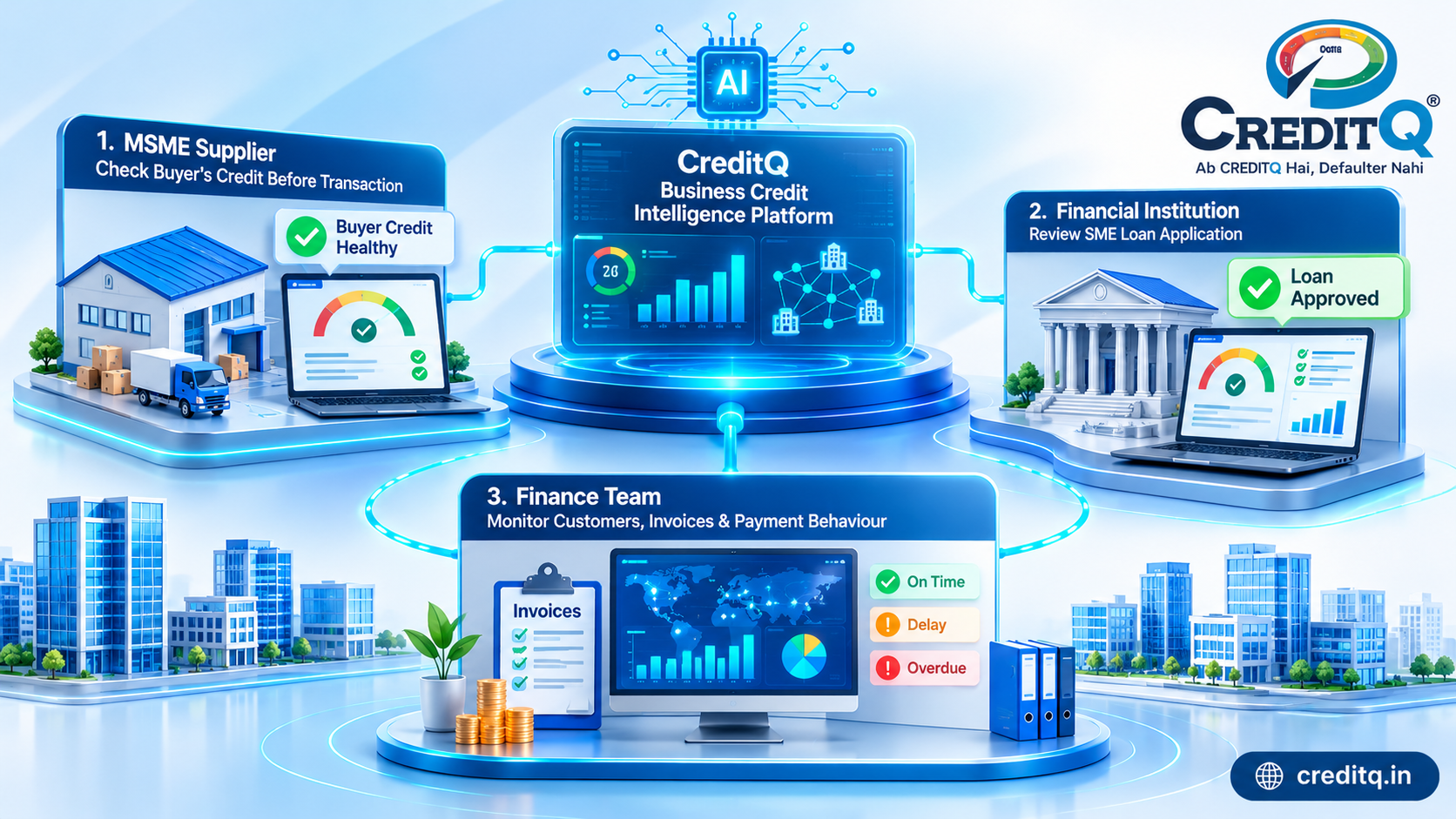
Here’s how AI and digital credit intelligence can support different business situations.
Scenario 1: An MSME Supplier Verifying a New Buyer
An MSME supplier receives a large first-time order from a wholesale buyer.
Instead of immediately approving credit, the supplier reviews the buyer’s available business information, checks previous payment-related records, and evaluates the proposed transaction.
Digital verification and credit intelligence can help the supplier assess the potential risks before dispatching goods.
Scenario 2: A Regional Lender Assessing SME Applications
A regional financial institution receives multiple SME loan applications.
Automated credit risk analysis can help organise financial records, identify missing information, and flag applications that require additional review.
Higher-risk or complicated cases can then be directed to human underwriters for closer examination.
Scenario 3: A Finance Team Monitoring Trade Debtors
A finance team manages dozens of business customers with outstanding invoices.
Instead of manually checking every transaction, it uses digital credit management tools to monitor due dates, share invoices, and send payment reminders.
Platforms such as CreditQ support these activities through Business Credit Management services, helping suppliers manage buyer-supplier transactions and follow-ups digitally.
Businesses looking for additional support with credit information, defaulter reporting, business credit management, and settlement can explore CreditQ’s business credit management services.
These examples demonstrate how AI analysis and digital credit management can complement each other in modern B2B trade.
Step 6: Weigh Benefits, Challenges, Data Privacy and Human Oversight
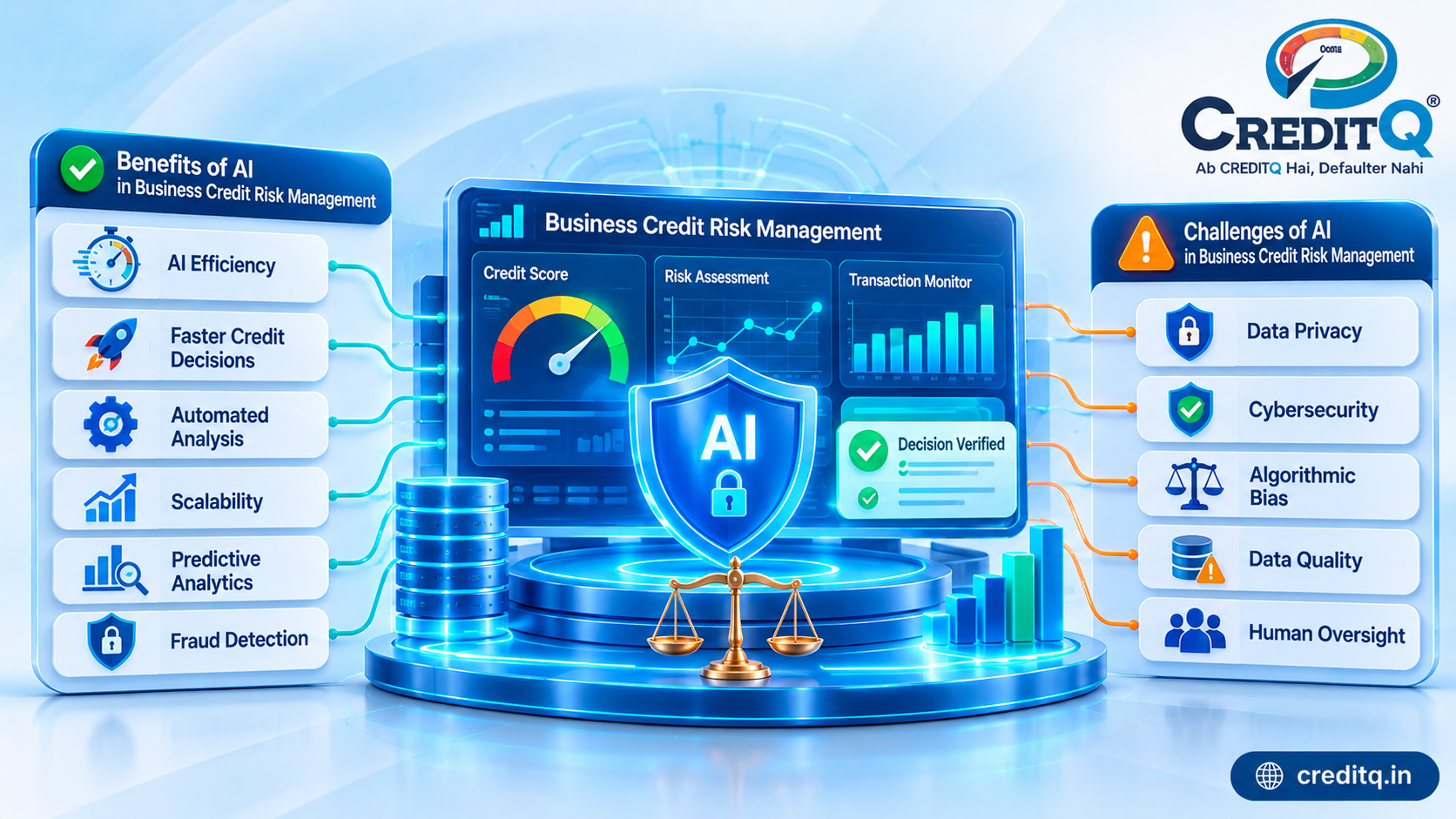
AI brings meaningful advantages to credit risk management, but it isn’t a cure-all. Understanding both its strengths and limitations is essential.
Benefits of AI in Credit Risk Management
- Faster credit decisions: Automated analysis can reduce the time required for preliminary assessments.
- Greater consistency: Algorithms can apply predefined evaluation criteria across multiple cases.
- Scalability: Businesses can analyse larger volumes of transactions and customer records.
- Earlier risk identification: Continuous monitoring can help identify unusual payment patterns.
- Reduced manual workload: Routine checks and data processing can be automated.
- Better business insights: Multiple data sources can help finance teams understand potential credit exposure.
Challenges of AI in Credit Risk Management
- Data quality: Incomplete or outdated information can produce unreliable assessments.
- Algorithmic bias: Historical data may contain biases that influence model outcomes.
- Limited business context: Automated systems may not understand temporary industry disruptions or unusual business circumstances.
- Integration costs: Connecting AI systems with existing accounting and ERP platforms can require time and investment.
- Data privacy: Business financial and identity information needs appropriate protection.
Why Data Privacy and Human Oversight Matter
Business credit data often contains sensitive financial and identity information. Organisations handling this data need clear policies governing how information is collected, stored, processed, and shared.
Human oversight is equally important. AI may identify unusual payment behaviour, but a credit manager should investigate the underlying circumstances before making significant decisions.
For example, a temporary industry slowdown may cause payment delays without indicating that a buyer is permanently unable to meet its obligations.
AI-based credit risk analysis is generally useful for pattern detection and processing speed, but its reliability depends on data quality, model design, and ongoing validation.
Businesses should therefore treat AI as a decision-support tool rather than an unquestionable authority.
For additional information about CreditQ’s platform, business credit services, reporting processes, and settlement-related questions, visit the CreditQ Frequently Asked Questions page.
Step 7: Prepare for Future Trends in AI-Powered Business Credit Management
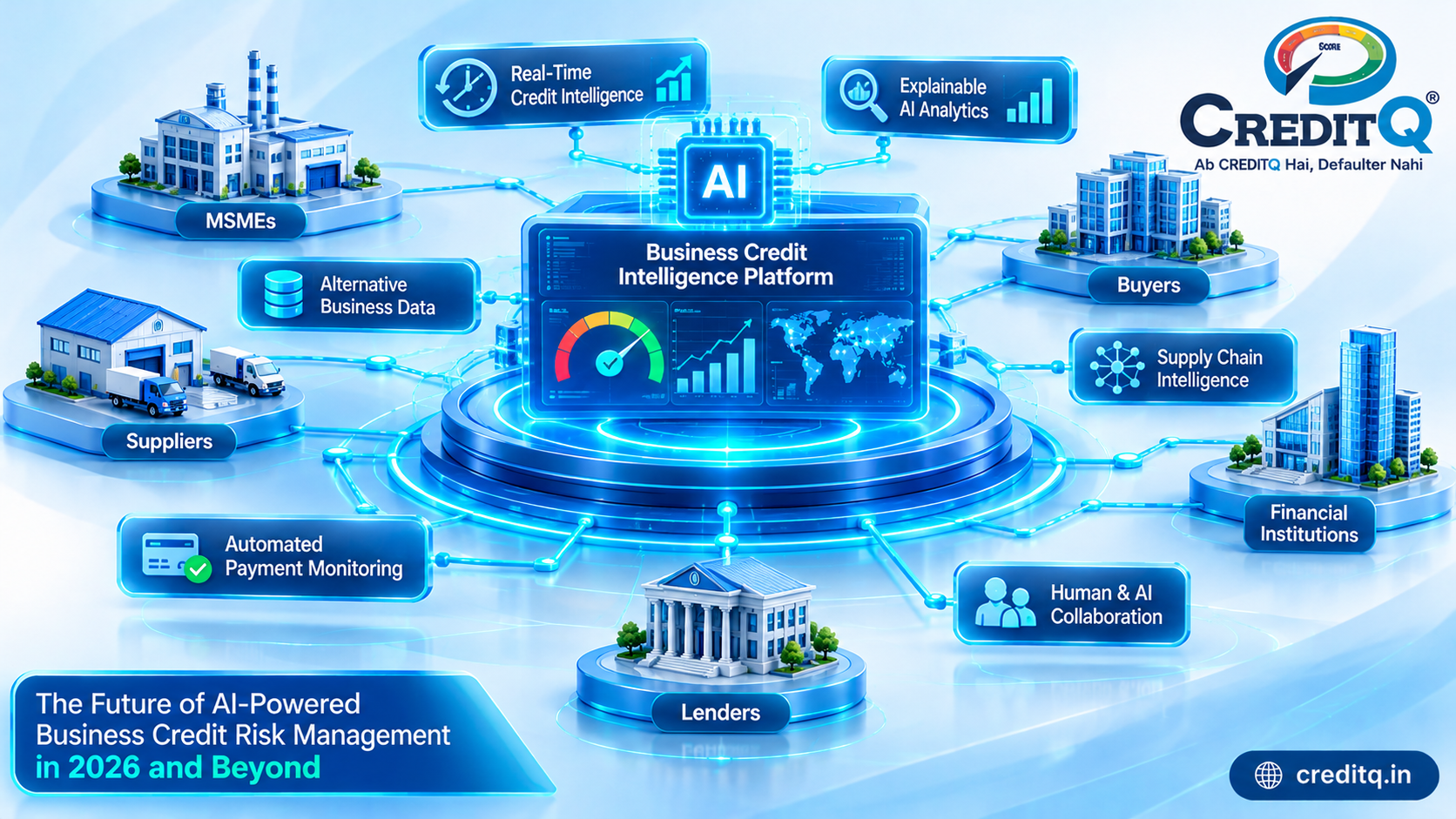
Looking ahead, several developments are likely to shape the future of business credit risk management.
1. Real-Time Credit Intelligence
Businesses are increasingly looking for updated credit information rather than depending entirely on periodic reporting. Better data connectivity can help credit teams respond more quickly to changing payment behaviour.
2. Explainable AI
Credit managers and regulators want to understand why a model has assigned a particular risk level.
Explainable AI aims to make automated decisions easier to understand by showing which factors influenced the assessment.
3. Alternative Data Sources
Credit risk models may increasingly incorporate additional information, including supply chain indicators, operational data, transaction activity, and relevant industry signals.
These sources can provide a broader picture of business performance when used responsibly.
4. AI-Powered Payment Monitoring
Automated payment reminders, invoice tracking, transaction monitoring, and customer communication are likely to become more integrated with business accounting systems.
This can help suppliers manage outstanding payments without relying entirely on manual follow-ups.
5. Human and AI Collaboration
The future of credit management is more likely to involve collaboration than complete replacement.
AI can handle data-heavy analysis and routine monitoring, while credit professionals focus on business relationships, negotiations, complex cases, and final decisions.
The combination of digital credit intelligence and human expertise can help businesses build more structured and informed credit management processes.
Frequently Asked Questions
1. How is AI used in business credit risk management?
AI analyses financial records, transaction history, payment patterns, and other relevant business data to identify potential credit risks. It can support credit scoring, business verification, fraud detection, and early warning systems.
2. What is AI-powered credit scoring and how does it work?
AI-powered credit scoring uses machine learning and multiple data sources to estimate a business’s credit risk. It can consider financial information, payment history, transaction patterns, and other relevant indicators.
3. Can AI replace traditional credit risk assessment methods?
Not entirely. AI can improve the speed and consistency of data analysis, but traditional financial evaluation and human oversight remain important for complex or high-value credit decisions.
4. How does AI help detect fraud in credit transactions?
AI can identify unusual transaction patterns, duplicate invoices, mismatched business information, and suspicious account activity. These indicators can be flagged for further investigation.
5. Is AI-based credit risk analysis accurate and reliable?
Its reliability depends on the quality of the underlying data, model design, and regular validation. Human review remains important, particularly when information is incomplete or business circumstances are unusual.
6. How can MSMEs improve their business credit management?
MSMEs can improve credit management by verifying buyers before extending credit, maintaining accurate transaction records, setting appropriate credit limits, tracking outstanding invoices, and following up on overdue payments.
Digital platforms like CreditQ can support these activities through business credit management, credit information reports, and payment follow-up services.
7. What are the future trends in AI-powered credit management?
Major trends include real-time credit intelligence, explainable AI, alternative data analysis, automated payment monitoring, and closer collaboration between AI systems and credit professionals.
Conclusion: Turning AI Into a Trusted Credit Risk Partner
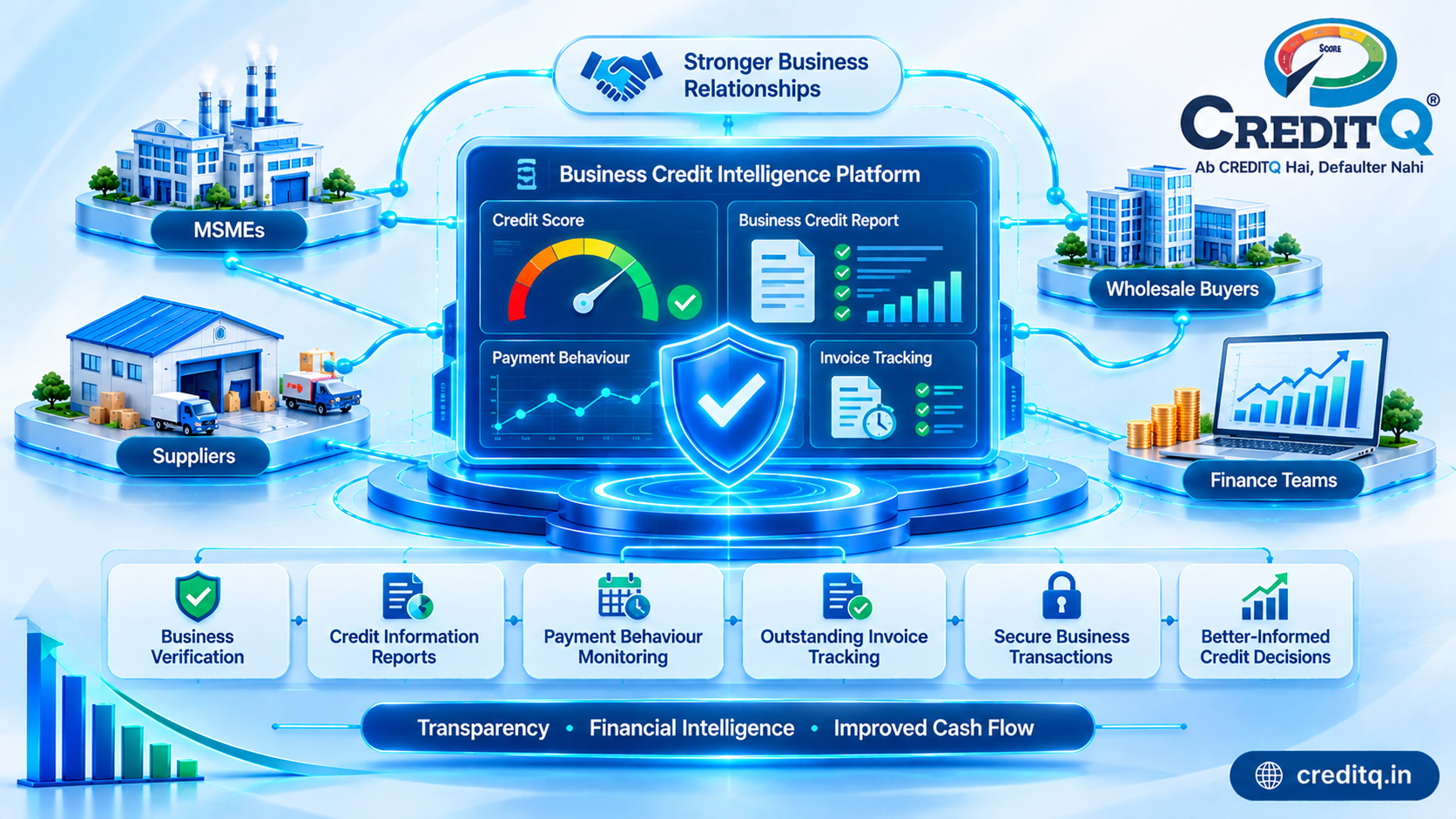
Adopting AI in business credit risk management isn’t about removing people from the process. It’s about giving credit managers, lenders, suppliers, and MSME owners better information so they can make more informed decisions.
From understanding traditional credit assessment limitations to exploring machine learning, automated verification, fraud detection, and early warning systems, businesses have several opportunities to improve their credit management processes.
However, successful adoption requires reliable data, appropriate privacy safeguards, regular monitoring, and human oversight.
Platforms like CreditQ make business credit management more accessible through services such as Credit Information Reports, business credit management, business defaulter reporting, and settlement support.
For businesses looking to strengthen their credit management process, explore CreditQ’s services and understand how business credit intelligence can support better-informed B2B decisions.
Better Cash Flow. Better Credit Decisions. Smarter Business Growth.
Visit www.creditq.in to explore business credit intelligence and management solutions.
| Image | ALT Text |
| 1. Featured Image | AI in business credit risk management |
| 2. Traditional Risk | Traditional credit risk management |
| 3. AI & Machine Learning | AI and machine learning in finance |
| 4. Credit Scoring | AI-powered business credit scoring |
| 5. Fraud Detection | AI fraud detection in business |
| 6. B2B Scenarios | AI-powered B2B credit assessment |
| 7. Benefits & Challenges | AI credit risk benefits and challenges |
| 8. Future of AI | Future of AI in credit management |
| 9. Conclusion | AI-powered business credit intelligence |